Amberjack Fishing
San Diego
Yellowtail amberjack and Pacific barracuda — two hard-fighting Southern California species that turn first-time anglers into lifetime ones. Spring through fall, both are within reach of Mission Bay.
Meet the Yellowtail
and Pacific Barracuda
Two hard-fighting Southern California species share this category, and both deliver the kind of pull that turns first-time anglers into lifetime ones:
-
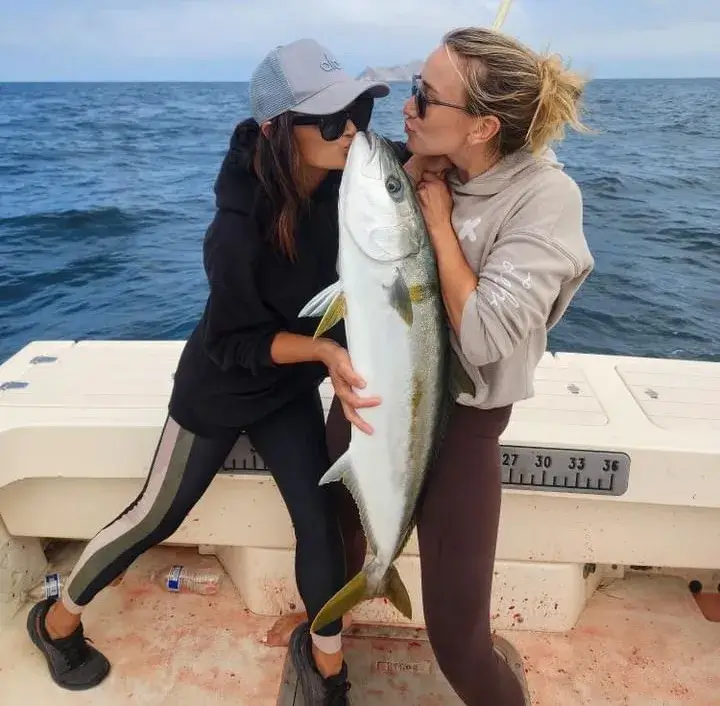
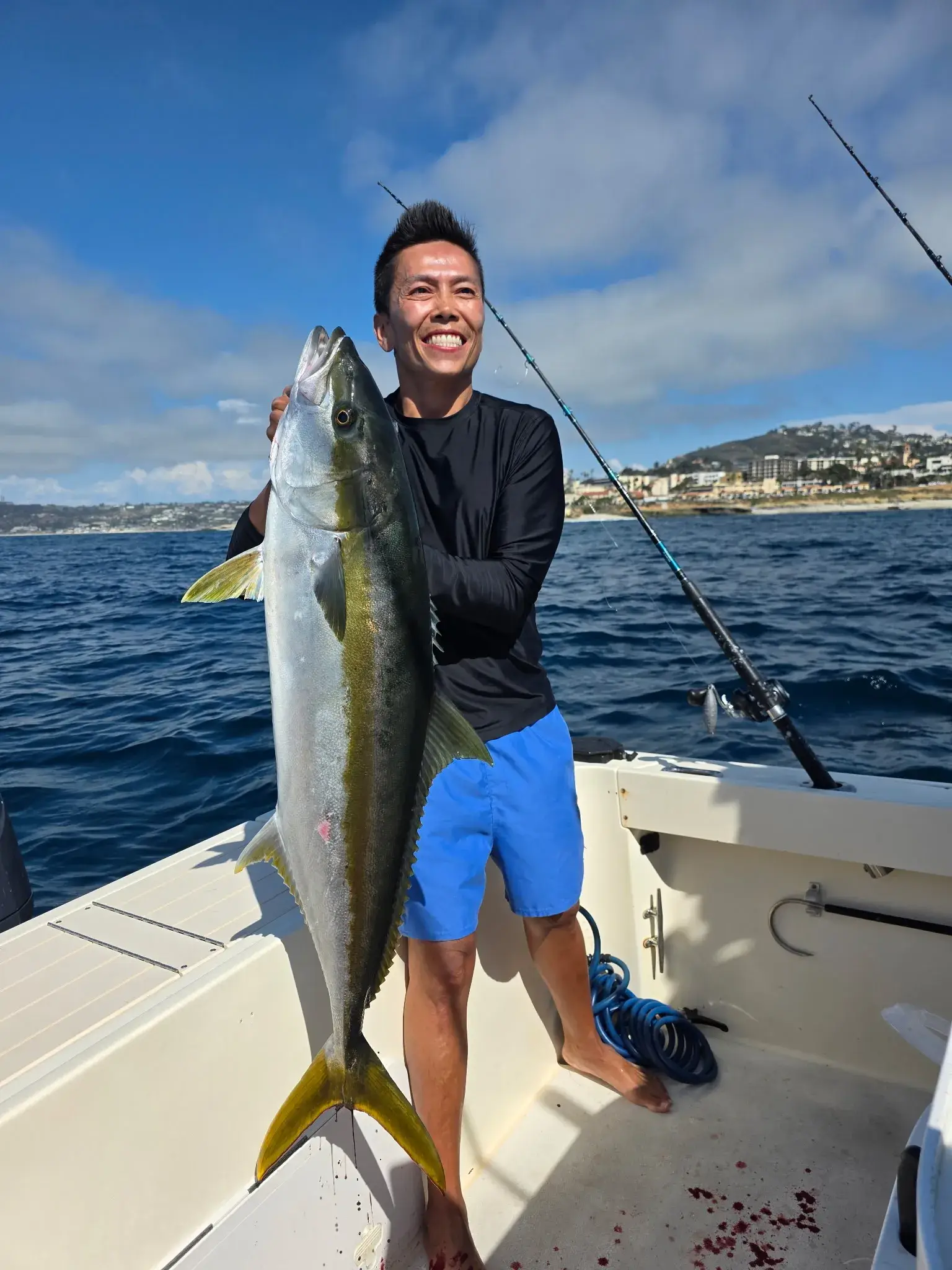
Yellowtail Amberjack8–50+ lbs Locally just called "yellowtail." A muscular, torpedo-shaped jack with a bright yellow tail and a vertical yellow stripe down the side. Typical catches run 8 to 25 pounds, and trophy homeguard fish at the Coronados Islands can top 50 pounds. This is the fish locals schedule trips around.
-
Pacific Barracuda3–10 lbs Sleek, silver, toothy, and built like a missile. Most barracuda run 3 to 10 pounds and hit surface jigs like they have a personal grudge. Different species from the larger Atlantic Great Barracuda — but the fight is just as fun on light tackle.
Both species feed aggressively, jump on lures, and grade out beautifully on the dinner plate. Yellowtail in particular is the same fish you have probably seen on a sushi menu as hamachi-grade jack.
Yellowtail FeverEvery spring the first big push of yellowtail moves north from Baja. The local angling community goes a little crazy — boats book out, docks fill at dawn, and every conversation turns into "where, when, how big."
What Makes Them So Special
These fish are basically the high-performance sports cars of California inshore fishing.
Trophy "homeguard" yellowtail at the Coronados Islands can top 50 pounds. The fish that calls a reef home all year gets big.
Yellowtail live a maximum of about 12 years, with average lifespans of 5 to 6 years — fast-cycling fish that recover well from fishing pressure.
Most yellowtail reach sexual maturity at 2 to 3 years, keeping recruitment fast enough to support a healthy sport fishery year after year.
Genetic studies in 2015 showed the Northeast Pacific population (Seriola dorsalis) is distinct from southern hemisphere relatives — local yellowtail are their own species.
Where to Find Them Off Our Coast
These fish show up in three distinct zones — which is part of what makes them such great target species. The bite can be local or 20 miles south in Mexico.
Local Coastline Within 10 miles
- Kelp lines, boiler rocks, and reefs off Mission Bay
- Schools patrol kelp edges late spring through fall
- Barracuda push close to shore in spring and early summer
Coronados Islands 20 miles south — Mexico
- Legendary "homeguard" jacks hold year-round on the rocks
- Bigger fish, bigger schools, more reliable bites
- The place locals go when they want a shot at a 30–50 lb fish
Offshore Kelp Paddies Mixed-bag territory
- Jacks stack under floating kelp paddies far offshore
- Often mixed in with tuna and dorado on the same stop
- Barracuda stay closer to the coast on most days
Tackle, Bait & Technique
These fish love an active bait, and Brothers Sport Fishing crews set you up with the gear to deliver it.
| Rod | Medium to medium-heavy spinning or conventional, 7 ft |
| Reel | Shimano with 30–65 lb braid |
| Leader | 25–50 lb fluorocarbon |
| Hooks | 1/0 to 3/0 live bait hooks |
| Bait | Live sardines, mackerel, or anchovies. Squid works especially well at the Coronados. |
| Lures | Surface iron jigs (Tady, Salas), knife jigs, and surface poppers |
Live Bait Fly-Lining
The classic move: pin a sardine through the nose, free-spool it into the kelp, and let the bait swim naturally. The strike comes when the bait runs out of places to go — and then the fight is straight down.
Yo-Yo Jigging
Drop a heavy chrome jig to the bottom, then crank it back up at full speed. The jacks crush a yo-yo jig on the upstroke, and the fight starts the moment the rod loads. It is as violent as it sounds.
Barracuda on Light Tackle
Surface poppers and chrome spoons on light spinning gear make barracuda one of the most exciting half-day trips on the Pacific. They hit anything that splashes — and they clear the water when they do it.
Your Amberjack Charter Options
Yellowtail and barracuda show up on more trip types than almost any other local sportfish — from a short coastline run to a full offshore day.
3/4 Day Charter
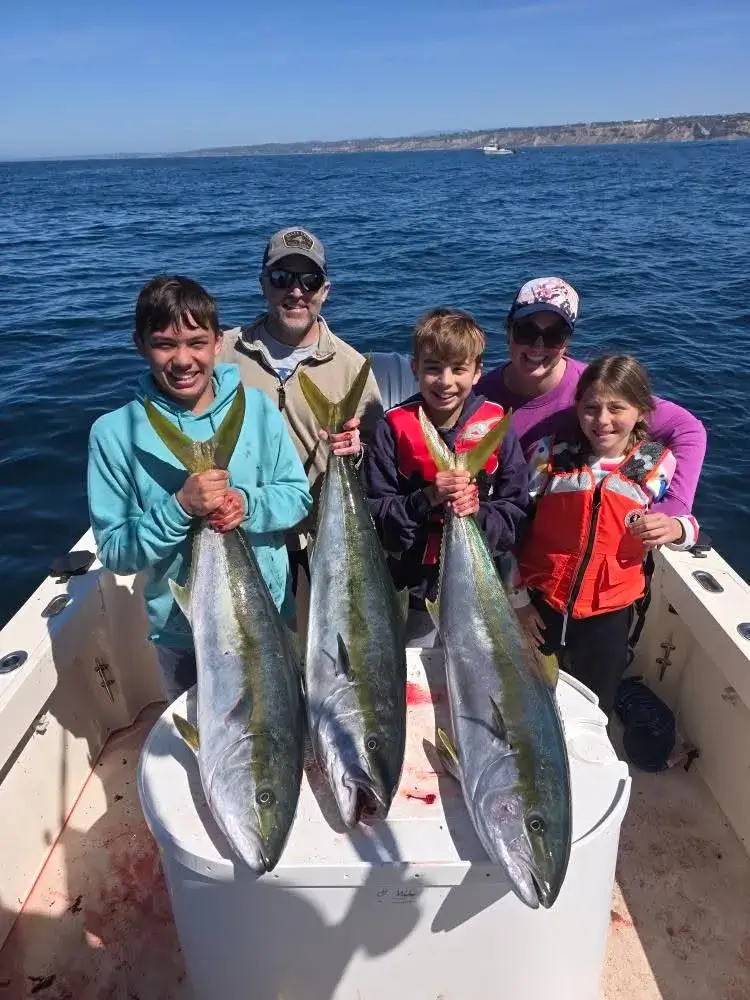
Coastline, Coronados Islands, or offshore — the most flexible trip for chasing the bite wherever it shows up. The top option for yellowtail on a normal season day.
View This Charter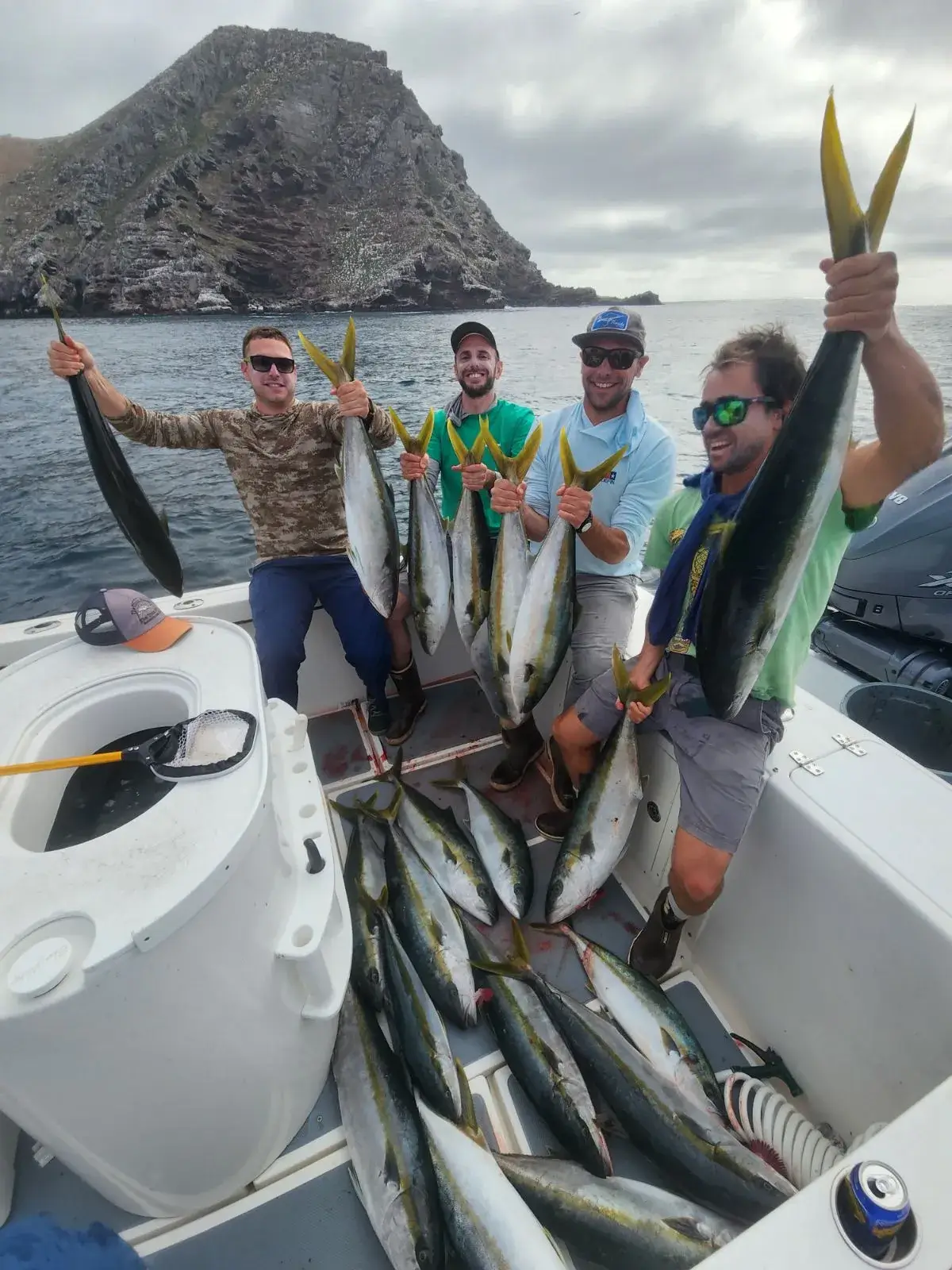
Coronado Islands Charter
A dedicated run across the international line for homeguard yellowtail in Mexican waters. Bigger fish, bigger schools, and a genuine shot at a 30 to 50+ pound jack.
View This Charter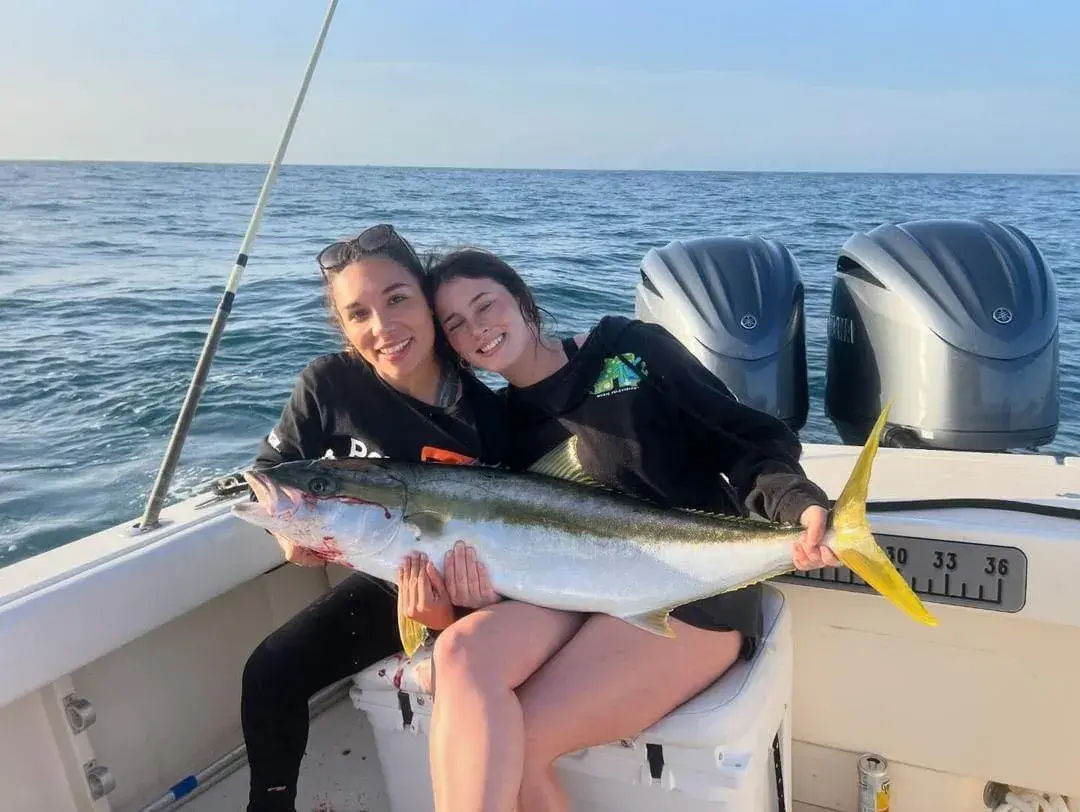
Offshore Charter
Best for chasing yellowtail schools under offshore kelp paddies alongside tuna and dorado. A full mixed-bag offshore day with a realistic shot at multiple species.
View This CharterAlso in the mix
Most trips here come with side action. Plan on hooking into bluefin and Pacific bonito on the offshore runs and calico bass on the coastline kelp lines.
Frequently Asked Questions
A real San Diego phenomenon. Every spring, the first big push of yellowtail moves north from Baja, and the local angling community goes a little crazy. Boats book out, the docks fill up at dawn, and conversations turn into "where, when, how big." The fever usually breaks by mid-summer once the schools settle in.
April through October is the main run, with bonus action around the holidays in warm-water years. The Coronados hold "homeguard" yellowtail year-round — even in winter those resident fish are available on a Coronados-specific trip.
The Coronados sit in Mexican waters, so appropriate ID is required for international runs. Brothers Sport Fishing crews brief you on exactly what documentation is needed when you book a Coronados trip.
California's current minimum size for yellowtail is 24 inches fork length. The captain measures every keeper at the rail before it hits the cooler. Regulations are updated periodically — Brothers Sport Fishing captains always run to current rules.
Yellowtail amberjack (Seriola dorsalis) is one species within the broader amberjack group. The local fish is technically an amberjack, but everyone here calls it yellowtail. Same animal, two names. On the plate it's hamachi — the same genus as Japanese amberjack.
Ready to Hook into a Yellowtail?
Mission Bay, San Diego — private charters available April through October and beyond.
Text or Call +1 619-289-3352