Saltwater Bass
Fishing San Diego
Four species. Kelp lines, reef edges, and open sand. The classic California inshore experience — and one of them can weigh over 500 pounds.
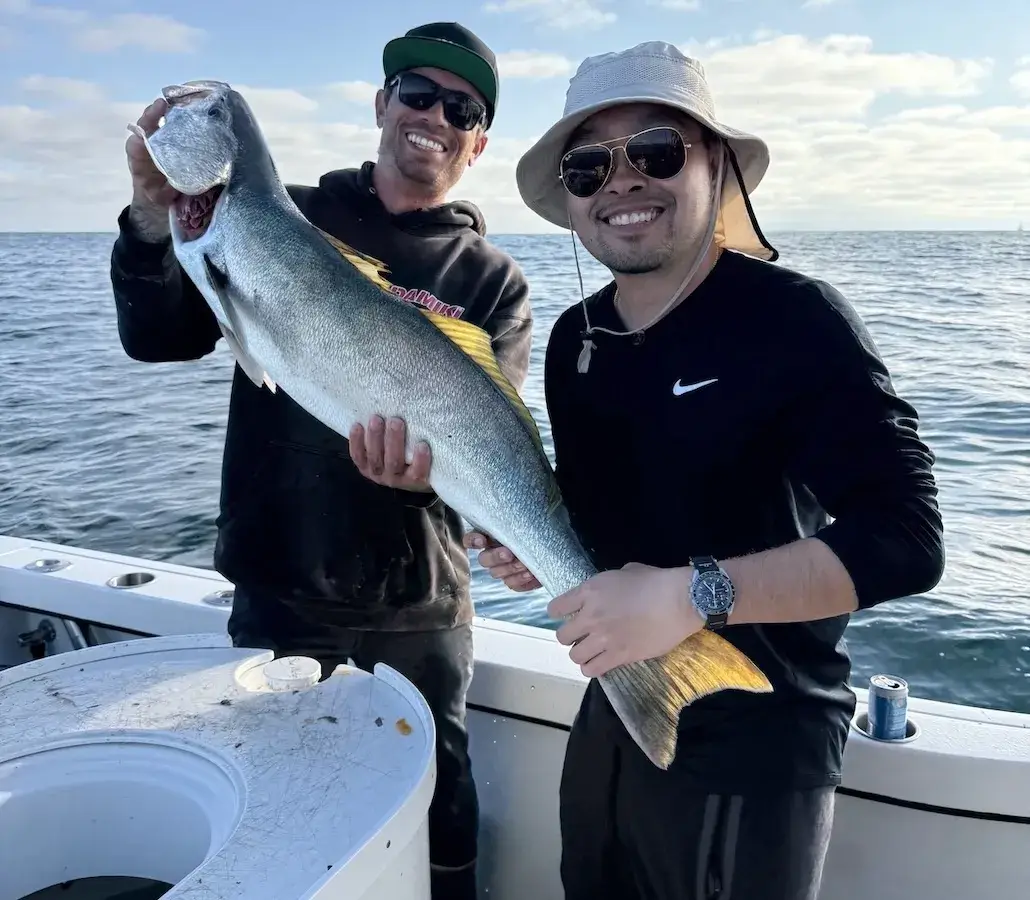
Meet the Saltwater Bass
Four heavyweight species hold the kelp lines, sandy edges, and reef bottoms off our coast, and each one fights a little differently from the next:
-
Calico Bass (Paralabrax clathratus)1–8+ lbs Also called kelp bass. A muscular green-and-bronze ambush predator that lives in the kelp and hits surface lures hard. Typical catches run 1 to 4 pounds with hot bites regularly producing fish over 8.
-
Barred Sand Bass (Paralabrax nebulifer)2–5 lbs typical Gray-bronze with vertical bars. Sand bass hold over open sand near structure and pile up in big schools during their summer spawn — one of the most reliable bites on the coast from June through August.
-
White Sea Bass (Atractoscion nobilis)15–60+ lbs Not actually a bass at all. White sea bass are croakers — members of the Sciaenidae family and the largest of the group on the West Coast. They run 15 to 40 pounds locally, with trophies topping 60.
-
Giant Sea Bass (Stereolepis gigas)C&R Only A genuine California legend. The species reaches over 500 pounds and lifespans of 70-plus years. Protected and catch-and-release only in California — but hookups happen and every release is one for the books.
If you want the classic California inshore experience, this is the lineup that delivers it.
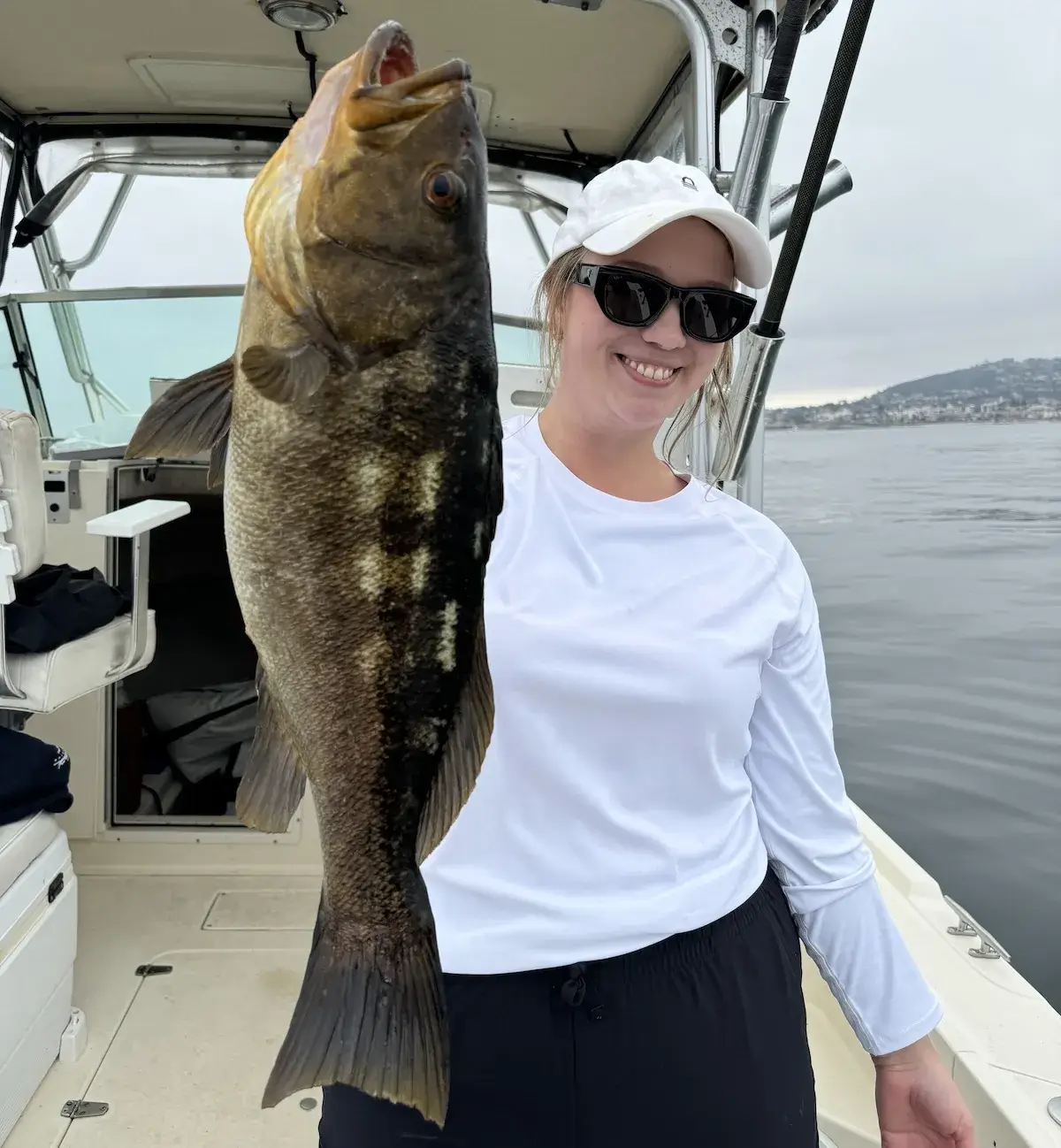
What Makes Them So Special
Each of these species earned its place in California fishing history through a wild bit of biology or behavior that no other fishery quite matches.
Recovery efforts have brought the species back from near collapse. Sightings off La Jolla and the Coronados are now regular. Every release counts toward a population that matures slowly and lives for decades.
Giant sea bass mature slowly — first reproducing at 13 to 15 years old. A 200-pound fish may be 40 or 50 years old. It is exactly why California has kept the species fully protected since 1982.
A 5-pound calico might be a 12-year-old fish. The slow growth is why California sets careful size limits. The 14-inch minimum is not arbitrary — it protects fish that haven't spawned yet.
Sand bass form massive aggregations during summer spawn — thousands of fish stacking on the same shallow flats. The bite during peak spawn is one of the most reliable on the entire coast.
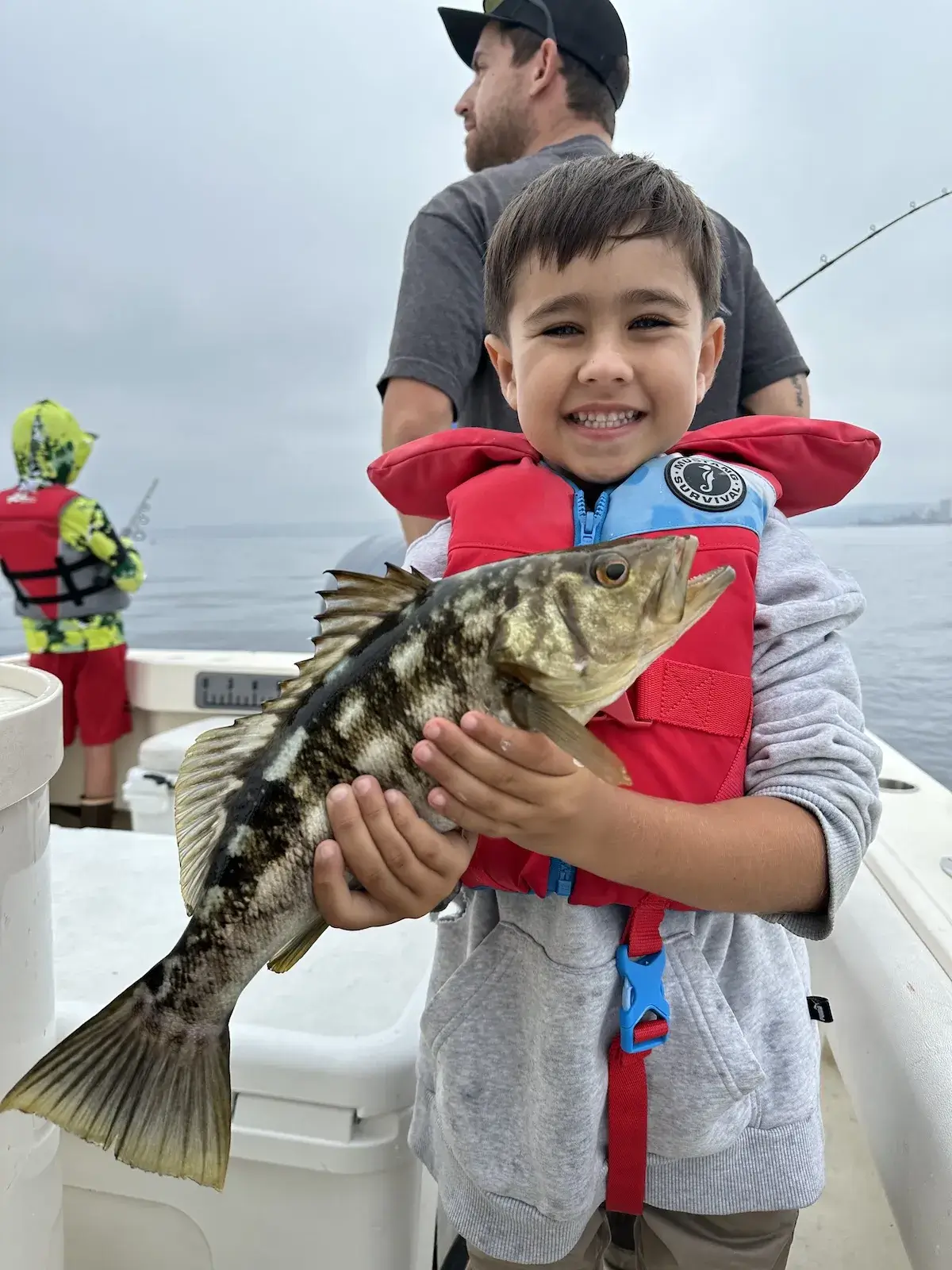
Where to Find Them Off Our Coast
This group lives entirely in the inshore zone — which means you can target them on a short morning trip or a longer day without running far offshore.
Kelp Lines
- Calico bass patrol standing kelp from spring through fall
- Surface lures and fly-lined bait both produce in the canopy
Reef & Structure
- White sea bass and giant sea bass hold in 40 to 150 feet
- Boiler rocks and reef edges concentrate both species
Open Sand Flats
- Sand bass stack here during the summer spawn, June–August
- Scattered structure near the flats keeps fish anchored in place
Local Coastline Within 10 miles
- Year-round kelp, reef, and sand fishing within Mission Bay range
- Peak action May through September as all four species are active
- Best covered on the Half-Day or 3/4 Day trips
Coronados Islands 20 miles south — Mexico
- Bigger calico averages and a legendary homeguard white sea bass population
- Lighter pressure on the reefs than the local coastline
- Full-day run — best opportunity for trophy fish on a private charter
Tackle, Bait & Technique
These species respond to a range of techniques. Brothers Sport Fishing crew will swap your gear depending on which target is showing — here is what goes in the water.
| Rod | Medium to medium-heavy spinning or conventional, 7 feet |
| Reel | Shimano with 25 to 50 pound braid |
| Leader | 20 to 40 pound fluorocarbon |
| Hooks | 1/0 to 3/0 live-bait hooks |
| Bait | Live sardines, anchovies, mackerel, or queenfish; white sea bass crush live squid during the spring run |
| Lures | Surface iron, swimbaits, and rubber-tail jigheads all produce depending on species and conditions |
Calico: Fly-line the Kelp
Free-line a live bait into the canopy or along the kelp edge and let it swim. Calico will hit the bait, the surface, and the kelp-edge ambush angle. Use surface iron on active fish — the strike is violent and the fight stays hot all the way to the boat.
White Sea Bass: Dawn & Dusk Iron
Slow-troll a live squid along structure, or work a heavy iron jig along the reef edge in low-light hours. White sea bass feed most aggressively around dawn and dusk during the spring run, and they can turn off quickly in full sun.
Sand Bass: Dropper Loop on the Spawn
Dropper-loop rigs with squid or shrimp baits dropped over the summer aggregations. Fish stack so densely during peak spawn that the challenge is getting baits to the bottom through the school. Multiple fish per drift is common.
Your Saltwater Bass Charter Options
These fish live close enough to shore that a short trip still reaches productive water. Three trip types fit best, all from Mission Bay.
Half-Day Charter
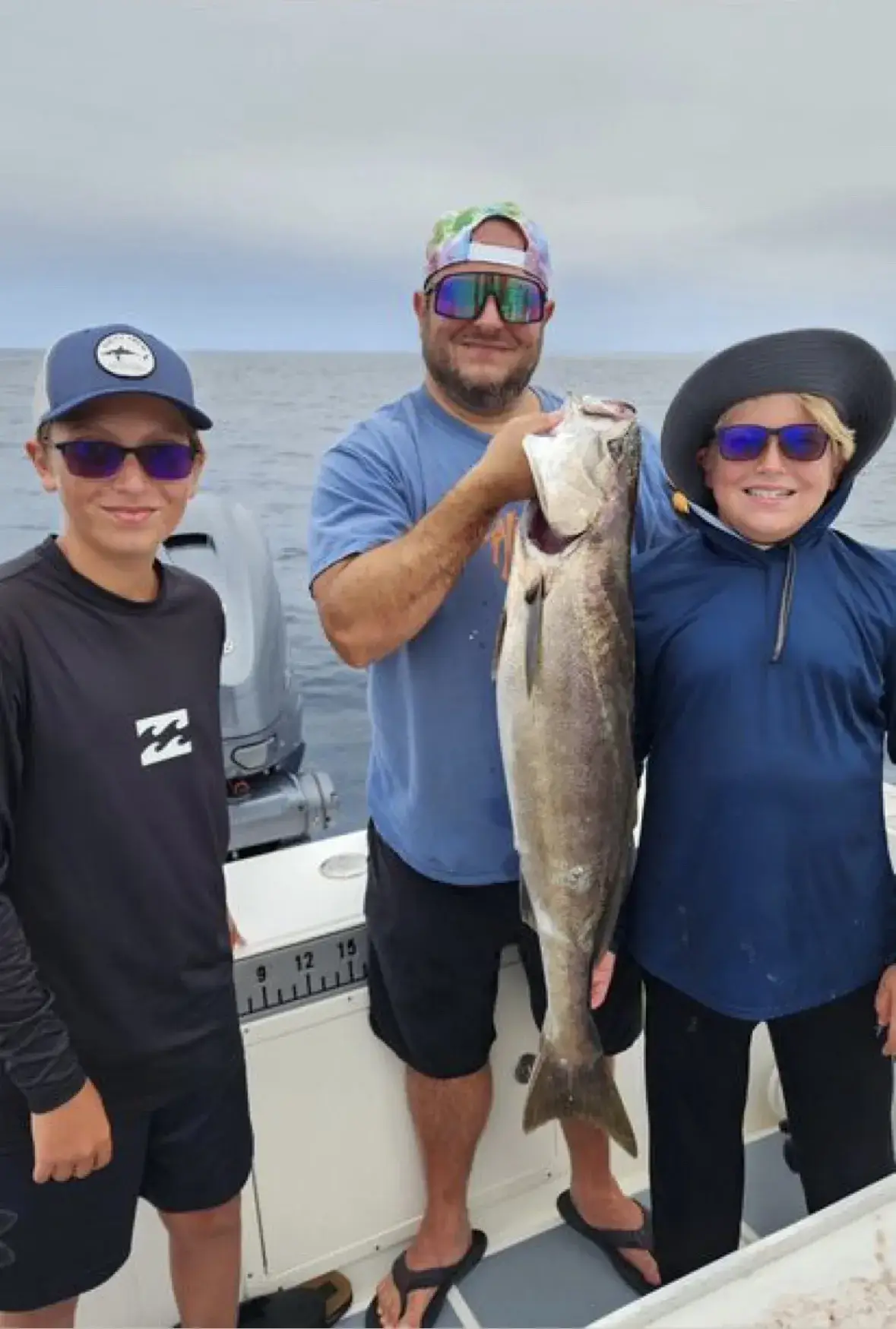
Nearshore fishing built around calico bass and halibut on the local kelp and sand bottom. The best-value bass trip — covers the most productive inshore water without a full-day commitment.
View This Charter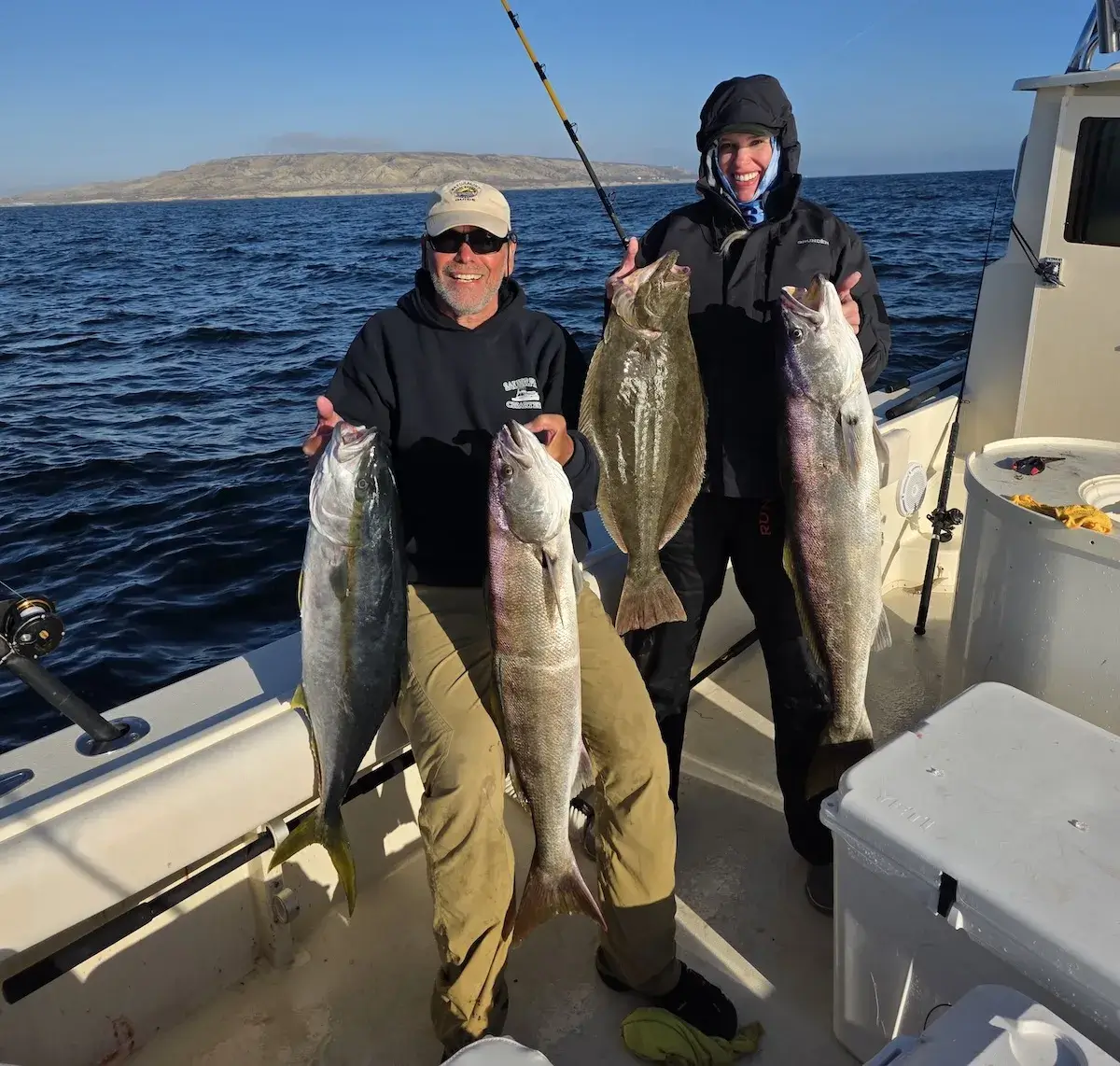
3/4 Day Charter
Nine hours to hit the kelp, the sand spawning flats, and the reef edges in a single day. The right trip when you want to target all species in one run — calico, sand bass, white sea bass, and whatever else shows up.
View This Charter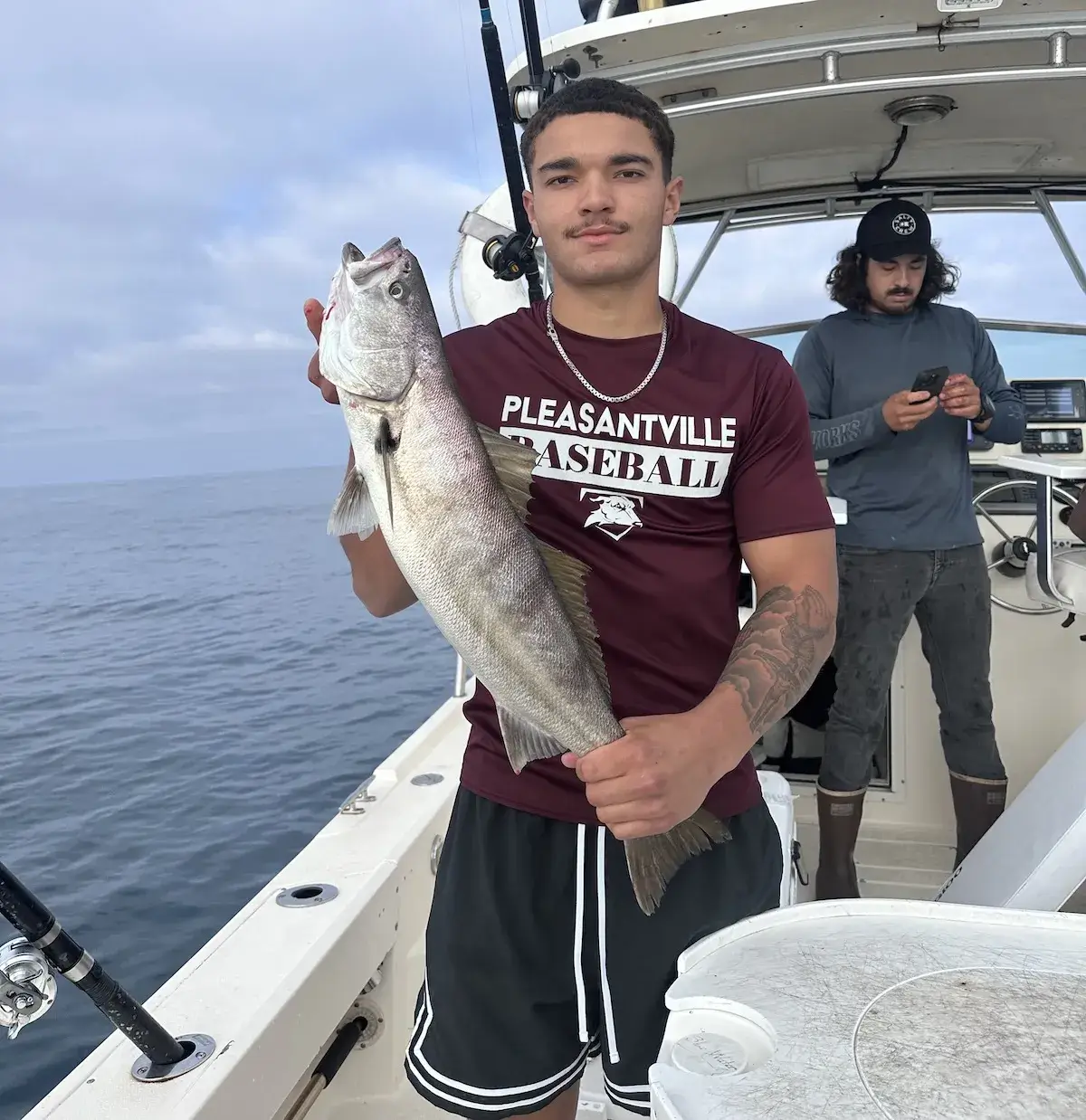
Coronado Islands Charter
A 12-hour day in Mexican waters for trophy calico and the legendary homeguard white sea bass population. Lighter pressure, bigger average size, and the reefs that produce the best bass fishing in the region. International ID required.
View This CharterAlso in the mix
Most bass trips come with side action — plan on running into California halibut on the sandy edges and yellowtail amberjack on the kelp lines throughout the season.
Frequently Asked Questions
Both are Paralabrax sea basses, but they live in different habitats and behave differently. Calico bass (P. clathratus) hold in standing kelp and on rocky structure year-round and are ambush predators that hit surface lures hard. Sand bass (P. nebulifer) hold over open sand near scattered structure and form huge, reliable spawning aggregations from June through August — a completely different target and a different technique.
Giant sea bass populations crashed in the mid-20th century from commercial harvest combined with extremely slow reproduction — the species does not spawn until 13 to 15 years old and can live more than 70 years. California listed them as a protected species in 1982. Recovery is real but ongoing, and recreational anglers are required to release every fish caught. Sightings off La Jolla and the Coronados are now regular, which is exactly what decades of careful protection looks like.
White sea bass peak April through July, with the strongest action at the Coronados in spring. The species can be caught year-round but volume drops significantly outside the spring window. Dawn and dusk produce best during peak season — these fish are low-light feeders and can turn off quickly in full sun.
No. White sea bass are croakers, family Sciaenidae — no relation to the Paralabrax sea basses. They share the name "bass" by common usage but are biologically a completely different group. The croaker family is named for the drumming sound males make during spawning aggregations. On a quiet night at anchor in spring, you can sometimes hear it through the hull of the boat.
California currently allows 5 calico bass per angler per day with a 14-inch minimum total length. Sand bass share the same combined bag limit. Regulations update annually — Brothers Sport Fishing captains verify current rules before every trip and measure every keeper at the rail.
Ready to Work the Kelp Lines?
Private bass charters from Mission Bay — year-round kelp fishing with peak season May through September.
Text or Call +1 619-289-3352Saltwater Bass
Fishing San Diego
Four species. Kelp lines, reef edges, and open sand. The classic California inshore experience — and one of them can weigh over 500 pounds.
Meet the Saltwater Bass
Four heavyweight species hold the kelp lines, sandy edges, and reef bottoms off our coast, and each one fights a little differently from the next:
-
Calico Bass (Paralabrax clathratus)1–8+ lbs Also called kelp bass. A muscular green-and-bronze ambush predator that lives in the kelp and hits surface lures hard. Typical catches run 1 to 4 pounds with hot bites regularly producing fish over 8.
-
Barred Sand Bass (Paralabrax nebulifer)2–5 lbs typical Gray-bronze with vertical bars. Sand bass hold over open sand near structure and pile up in big schools during their summer spawn — one of the most reliable bites on the coast from June through August.
-
White Sea Bass (Atractoscion nobilis)15–60+ lbs Not actually a bass at all. White sea bass are croakers — members of the Sciaenidae family and the largest of the group on the West Coast. They run 15 to 40 pounds locally, with trophies topping 60.
-
Giant Sea Bass (Stereolepis gigas)C&R Only A genuine California legend. The species reaches over 500 pounds and lifespans of 70-plus years. Protected and catch-and-release only in California — but hookups happen and every release is one for the books.
If you want the classic California inshore experience, this is the lineup that delivers it.
What Makes Them So Special
Each of these species earned its place in California fishing history through a wild bit of biology or behavior that no other fishery quite matches.
Recovery efforts have brought the species back from near collapse. Sightings off La Jolla and the Coronados are now regular. Every release counts toward a population that matures slowly and lives for decades.
Giant sea bass mature slowly — first reproducing at 13 to 15 years old. A 200-pound fish may be 40 or 50 years old. It is exactly why California has kept the species fully protected since 1982.
A 5-pound calico might be a 12-year-old fish. The slow growth is why California sets careful size limits. The 14-inch minimum is not arbitrary — it protects fish that haven't spawned yet.
Sand bass form massive aggregations during summer spawn — thousands of fish stacking on the same shallow flats. The bite during peak spawn is one of the most reliable on the entire coast.
Where to Find Them Off Our Coast
This group lives entirely in the inshore zone — which means you can target them on a short morning trip or a longer day without running far offshore.
Kelp Lines
- Calico bass patrol standing kelp from spring through fall
- Surface lures and fly-lined bait both produce in the canopy
Reef & Structure
- White sea bass and giant sea bass hold in 40 to 150 feet
- Boiler rocks and reef edges concentrate both species
Open Sand Flats
- Sand bass stack here during the summer spawn, June–August
- Scattered structure near the flats keeps fish anchored in place
Local Coastline Within 10 miles
- Year-round kelp, reef, and sand fishing within Mission Bay range
- Peak action May through September as all four species are active
- Best covered on the Half-Day or 3/4 Day trips
Coronados Islands 20 miles south — Mexico
- Bigger calico averages and a legendary homeguard white sea bass population
- Lighter pressure on the reefs than the local coastline
- Full-day run — best opportunity for trophy fish on a private charter
Tackle, Bait & Technique
These species respond to a range of techniques. Brothers Sport Fishing crew will swap your gear depending on which target is showing — here is what goes in the water.
| Rod | Medium to medium-heavy spinning or conventional, 7 feet |
| Reel | Shimano with 25 to 50 pound braid |
| Leader | 20 to 40 pound fluorocarbon |
| Hooks | 1/0 to 3/0 live-bait hooks |
| Bait | Live sardines, anchovies, mackerel, or queenfish; white sea bass crush live squid during the spring run |
| Lures | Surface iron, swimbaits, and rubber-tail jigheads all produce depending on species and conditions |
Calico: Fly-line the Kelp
Free-line a live bait into the canopy or along the kelp edge and let it swim. Calico will hit the bait, the surface, and the kelp-edge ambush angle. Use surface iron on active fish — the strike is violent and the fight stays hot all the way to the boat.
White Sea Bass: Dawn & Dusk Iron
Slow-troll a live squid along structure, or work a heavy iron jig along the reef edge in low-light hours. White sea bass feed most aggressively around dawn and dusk during the spring run, and they can turn off quickly in full sun.
Sand Bass: Dropper Loop on the Spawn
Dropper-loop rigs with squid or shrimp baits dropped over the summer aggregations. Fish stack so densely during peak spawn that the challenge is getting baits to the bottom through the school. Multiple fish per drift is common.
Your Saltwater Bass Charter Options
These fish live close enough to shore that a short trip still reaches productive water. Three trip types fit best, all from Mission Bay.
Half-Day Charter
Nearshore fishing built around calico bass and halibut on the local kelp and sand bottom. The best-value bass trip — covers the most productive inshore water without a full-day commitment.
View This Charter
3/4 Day Charter
Nine hours to hit the kelp, the sand spawning flats, and the reef edges in a single day. The right trip when you want to target all species in one run — calico, sand bass, white sea bass, and whatever else shows up.
View This Charter
Coronado Islands Charter
A 12-hour day in Mexican waters for trophy calico and the legendary homeguard white sea bass population. Lighter pressure, bigger average size, and the reefs that produce the best bass fishing in the region. International ID required.
View This CharterAlso in the mix
Most bass trips come with side action — plan on running into California halibut on the sandy edges and yellowtail amberjack on the kelp lines throughout the season.
Frequently Asked Questions
Both are Paralabrax sea basses, but they live in different habitats and behave differently. Calico bass (P. clathratus) hold in standing kelp and on rocky structure year-round and are ambush predators that hit surface lures hard. Sand bass (P. nebulifer) hold over open sand near scattered structure and form huge, reliable spawning aggregations from June through August — a completely different target and a different technique.
Giant sea bass populations crashed in the mid-20th century from commercial harvest combined with extremely slow reproduction — the species does not spawn until 13 to 15 years old and can live more than 70 years. California listed them as a protected species in 1982. Recovery is real but ongoing, and recreational anglers are required to release every fish caught. Sightings off La Jolla and the Coronados are now regular, which is exactly what decades of careful protection looks like.
White sea bass peak April through July, with the strongest action at the Coronados in spring. The species can be caught year-round but volume drops significantly outside the spring window. Dawn and dusk produce best during peak season — these fish are low-light feeders and can turn off quickly in full sun.
No. White sea bass are croakers, family Sciaenidae — no relation to the Paralabrax sea basses. They share the name "bass" by common usage but are biologically a completely different group. The croaker family is named for the drumming sound males make during spawning aggregations. On a quiet night at anchor in spring, you can sometimes hear it through the hull of the boat.
California currently allows 5 calico bass per angler per day with a 14-inch minimum total length. Sand bass share the same combined bag limit. Regulations update annually — Brothers Sport Fishing captains verify current rules before every trip and measure every keeper at the rail.
Ready to Work the Kelp Lines?
Private bass charters from Mission Bay — year-round kelp fishing with peak season May through September.
Text or Call +1 619-289-3352