Bonito Fishing
San Diego
Pacific bonito, bluefin tuna, yellowfin tuna, and skipjack — all four cruise the offshore waters off our coast. If sushi is your love language, this is your page.
Meet the Bonito and Tuna Family
Four members of the Scombridae family cruise the waters off our coast, and each one delivers a different fight, a different flavor, and a different-sized cooler:
-
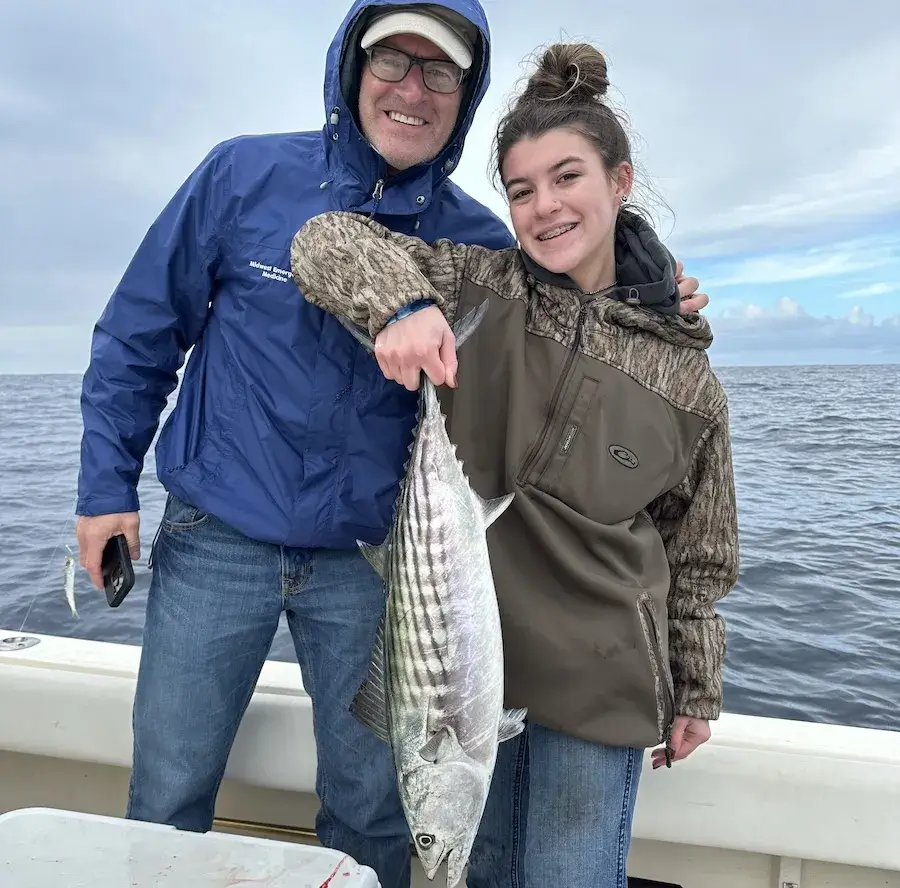
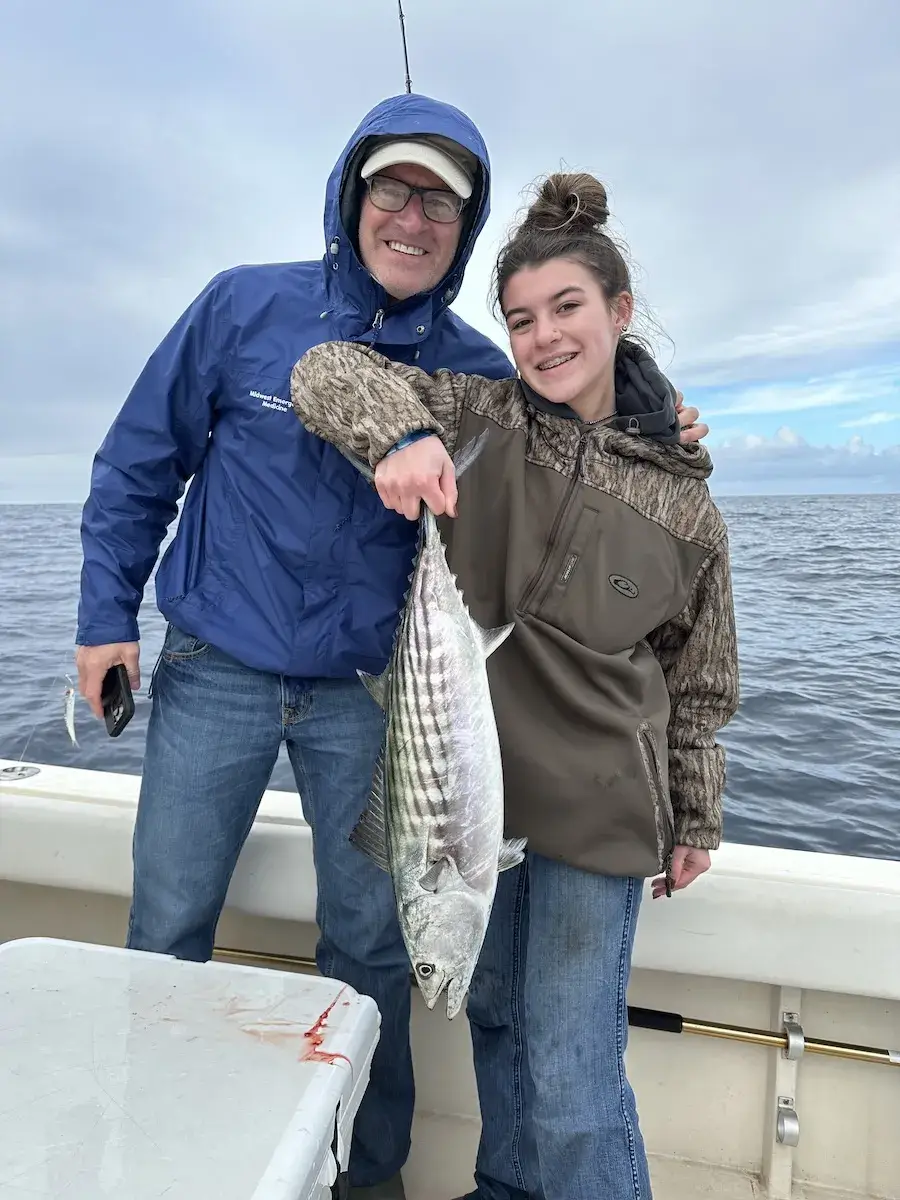
Pacific Bonito3–10 lbs
The headline nearshore fish. Bonito average 3 to 10 pounds, fight hard above their weight, and grill up to a rich, meaty fillet. A great catch for new anglers and kids on board. -
Pacific Bluefin Tuna30–400+ lbs
The trophy of trophies. A "schoolie" runs 30 to 80 pounds. A "cow" can crack 200 to 400 pounds and ruin your arms in the best way possible. -
Yellowfin Tuna20–100+ lbs
Classic offshore eater with bright yellow finlets and a slate-blue back. Typical catches run 20 to 80 pounds, and big fish push past 100. The flesh grades out as sushi quality across the board. -
Skipjack Tuna5–15 lbs
The fast-action species of the offshore world. Skipjack run in big schools, hit hard, and average 5 to 15 pounds. They make the freshest tuna salad and the best canned product on the planet.
 Tuna Family Species Photo
What Makes Them So Special
These fish carry biology that puts them in a class of their own.
A yellowfin can hit around 47 mph in a full chase, placing them among the fastest predators in the ocean.
Young Pacific bluefin make a trans-Pacific crossing from spawning grounds near Japan all the way to California to feed.
A 400-pound bluefin may be 15 to 20 years old. They grow fast as juveniles and keep packing on muscle for years.
They are partially warm-blooded — one of the only fish families that can hold body temperature above the surrounding water.
Where to Find Them Off Our Coast
This is offshore work. Brothers Sport Fishing captains chase the bite using a mix of intel and instinct.
Warm-Water Breaks
- Water temperature hits 65–72°F and the schools show up
- Captains read satellite temperature charts every morning
- Run adjusts daily based on where the break sits
Kelp Paddies & Bird Schools
- Floating kelp mats hold baitfish and pull schools in for ambush feeds
- Diving birds mark feeding action pushing baitballs to the surface
- Current lines create edges where fish stack
Named Offshore Spots
- The 60 Mile Bank, 425, and other known structure
- Depth changes and currents that hold fish year after year
- Captains know which spots are producing before the run begins
Bluefin Year-Round Potential
- Bluefin sometimes show year-round when conditions stay warm
- El Niño years push the season earlier and later
- Night trips produce the big cow bluefin on specific marks
Tackle, Bait & Technique
These fish demand gear that can stand up to an animal that may outweigh you. Setups vary by target — the deckhand will hand you the right rod before each drop.
- 50–100 lb conventional or two-speed reel
- 80–130 lb braid mainline
- Heavy fluorocarbon leader
- 4/0 to 7/0 circle hook
- 30–50 lb conventional reel
- 50–65 lb braid mainline
- Lighter fluorocarbon leader
- Circle hook, sized to bait
- Light spinning gear
- 20–30 lb line
- Smaller jigs and live bait
- Great for beginners and kids
Live Bait Stops, Trolling & Jigging
The most popular technique is live bait fishing on stops. The captain finds the school, drops the boat into idle, and the crew chums sardines or anchovies to bring the action under the boat. You pin a live bait on the hook, free-spool it into the water, and wait for the line to take off.
Trolling skirted lures and jigging with knife jigs both produce well, especially on deeper marks in the water column. When a big bluefin commits, it can run 200 yards of line straight down before the fight even feels real.
Your Bonito & Tuna Charter Options
These trips need range, fuel, and time. Three trip types do the job.
Offshore Charter
The everyday offshore run, built around chasing the bite wherever it shows up. Captains track warm-water breaks, kelp paddies, and bird activity to put you in the action.
View This CharterTrophy Bluefin Charter
Built for monster fish in the 200 to 400+ pound class. Heavy gear, long hours, dream fish. This is the bucket-list trip for serious offshore anglers.
View This Charter12-Hour Full Day Charter
A full offshore day for stacking yellowfin, skipjack, and bonito while staying within reach of the dock. Maximum time on the water, maximum cooler fill.
View This CharterAlso in the mix
Most days out here deliver a mixed-bag offshore experience. You will often see striped marlin cruising the same warm-water breaks and neon dorado lighting up the kelp paddies on the same trip.
Frequently Asked Questions
Pacific bonito and the tuna species — bluefin, yellowfin, skipjack — are all in the Scombridae family. Bonito is smaller and stays closer to shore. The tunas are bigger, faster, more migratory, and live further offshore. Both grill beautifully and grade out as sushi or sashimi quality fresh from the boat.
Bonito show up nearly year-round, with the strongest action late spring through fall. Tuna peak July through October. The whole family overlaps offshore from mid-summer through November.
The offshore grounds for tuna are international waters and do not require a passport in the same way a Coronados (Mexican waters) trip does. Brothers Sport Fishing crews brief you on whatever documentation the day's run needs before booking.
Yellowfin commonly run 20 to 80 pounds. Skipjack run 5 to 15. Pacific bonito run 3 to 10. Bluefin can vary widely, from 30-pound schoolies to 400+ pound cows.
Yes. Fresh bonito is rich, dense, and meaty. Many anglers prefer it for sushi-grade poke and seared loin. It does not freeze well, so plan to eat it within a day or two of the catch.
Ready to Fill the Cooler?
Mission Bay, San Diego — private charters available year-round.
Text or Call +1 619-289-3352