Dorado Fishing
San Diego
Bright gold flanks, electric blue tail, neon green back — and a fight that explodes off the surface in jumps you can hear from the rod tip. This is the technicolor headliner of San Diego's offshore season.
Meet the Dorado
(a.k.a. Mahi Mahi)
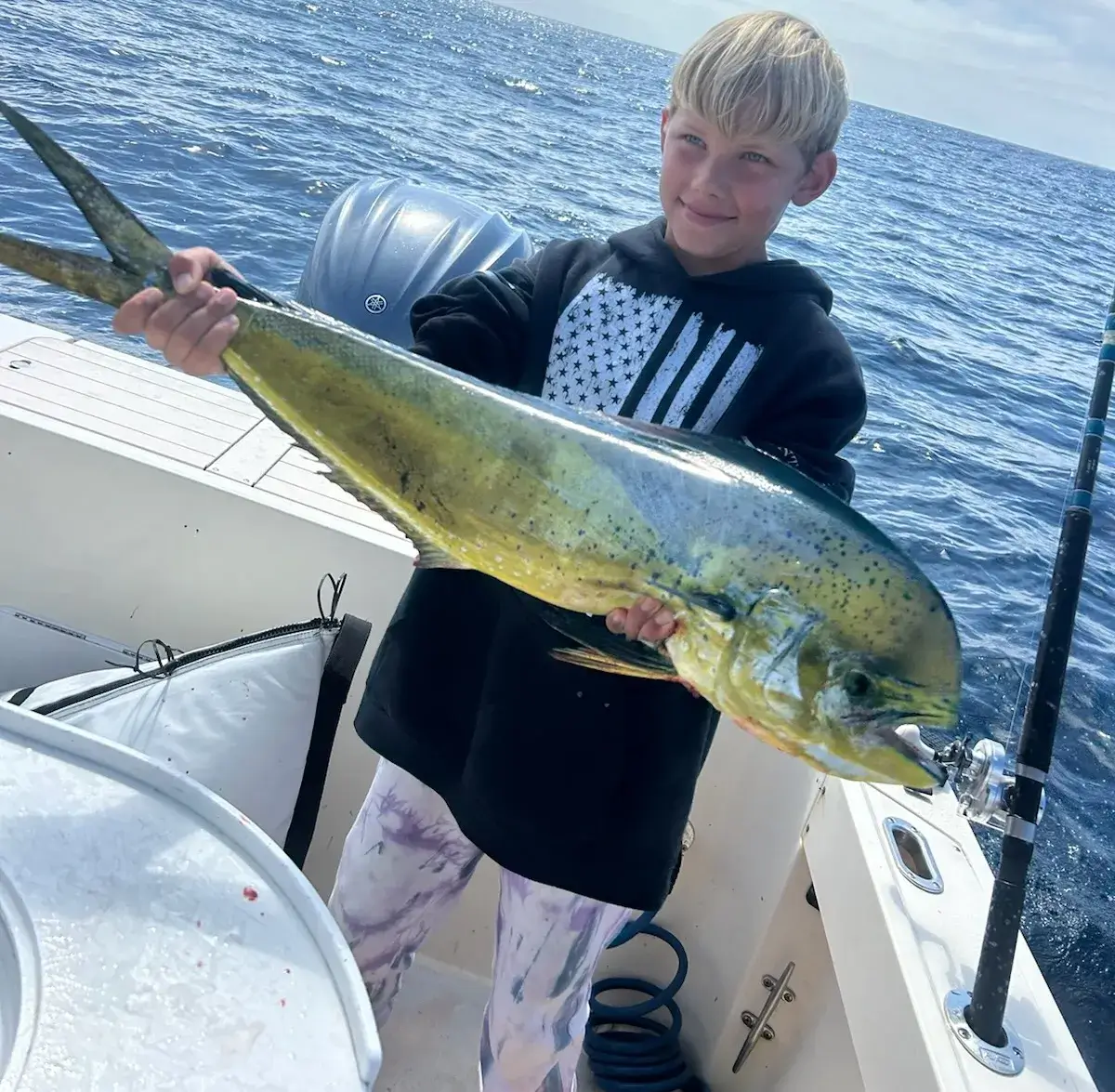
Bright gold flanks, electric blue tail, neon green back, and a fight that explodes off the surface in jumps you can hear from the rod tip. This is the technicolor headliner of offshore Southern California:
- Scientific name: Coryphaena hippurus, found in warm waters worldwide.
- Common names: Dorado in Spanish — the name used locally. Mahi Mahi in Hawaiian. Same fish, two cultures.
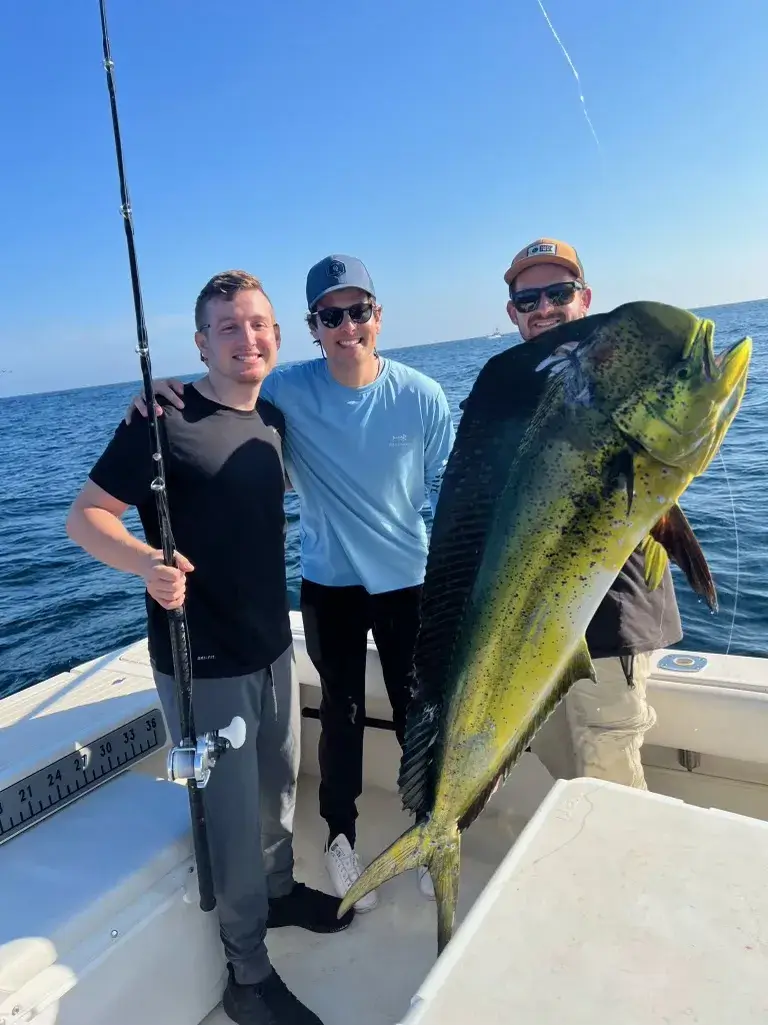
- Average size locally: 8 to 20 pounds, with bulls (males) topping 30 pounds in warm-water years.
- Color show: The species shifts color in seconds. A hooked fish flashes gold, green, electric blue, and silver as it fights. Colors fade fast once the catch leaves the water — the best photo is the one in the air.
- Males vs. females: Males have a tall, square forehead (the "bull"). Females have a rounded head.
What Makes Them So Special
This is the fastest-growing pelagic fish in the ocean. The numbers tell the story.
A young dorado can grow 2 inches per week in its first year, reaching 23 to 55 inches and 28 to 40 pounds by 12 months of age.
Estimated top swimming speed sits around 50 mph, with explosive surface strikes that often clear the water by 10 feet.
Most individuals live only 4 to 7 years total. The species lives fast and dies young — which is exactly why the fishery stays healthy under steady pressure.
Females spawn multiple times per year, releasing up to a million eggs per event. The species makes new fish faster than nearly anything else in the ocean.
Where to Find Them Off Our Coast
Dorado love floating things. If something is drifting on the surface of warm offshore water, there is probably a school holding under it.
Kelp Paddies
- Drifting mats of broken-off kelp are magnets for baitfish
- The shade pulls baitfish in — the baitfish pull the schools
- Captains run offshore scanning for any paddy breaking the surface
Floating Debris
- A pallet, a log, even a clump of trash holds fish offshore
- Any shade on open water attracts bait — bait attracts dorado
- Brothers Sport Fishing captains scan the surface on every run-out
Current Lines
- Where two currents meet, debris collects and baitfish stack up
- The action works the edges all day long
- Color changes in the water mark where the current lines run
Warm Blue Water
- Once temperature hits 70°F and turns deep blue, the bite turns on
- Captains read satellite SST charts every morning before the run
- El Niño years push warm water north earlier and hold it later
Tackle, Bait & Technique
These fish are aggressive eaters and not particularly picky — which makes them one of the most fun species to target offshore.
| Rod | Medium to medium-heavy spinning or conventional, 7 ft |
| Reel | Shimano spinning with 30–50 lb braid |
| Leader | 30–50 lb fluorocarbon |
| Hooks | 2/0 to 4/0 live bait hooks |
| Bait | Live sardines, anchovies, or mackerel. Dead squid strips when the bite is slow. |
| Lures | Bright surface poppers, small skirted jigs, feathered trolling lures |
The Kelp Paddy Approach
The classic approach is to spot a kelp paddy, idle up alongside it, and chum live sardines into the shadow. Within seconds, the water lights up with neon flashes. Cast a live bait, let it swim, and hold on.
Strikes often hit the surface with a violent flash, then the fish runs hard and jumps multiple times before settling into a deep, dogged fight. A single paddy can hold 5 to 50 fish — so a good find can fill the cooler in a single stop.
Dorado are famously good table fare. Mild, flaky, white meat that holds up to grilling, searing, blackening, or tacos — arguably the best fish for tacos on the entire Pacific coast.
Dorado in Action
A dorado on the line is a dorado in the air. They fight on the way up, in the air, and on the way down — then do it all over again.
Your Dorado Charter Options
These pelagics live offshore, so trips need range and fuel. Three trip types put you on the right water.
Offshore Charter
The main offshore run, designed around running deep and hunting paddies. Captains scan warm-water breaks, current lines, and floating structure to put you on the bite.
View This Charter3/4 Day Charter
Offshore destination option, ideal for a half-day-friendly cost on warm-water days when the paddies are close. A real offshore experience without a full-day commitment.
View This Charter12-Hour Full Day Charter
A long offshore day for maximum kelp paddy time and a real chance at multiple species. The most time on the water, the most chances at a cooler full of dorado.
View This CharterAlso in the mix
Most days out here come with offshore company. Plan on running into yellowfin and bluefin tuna on the same water and striped marlin cruising the warm-water breaks on the same trip.
Frequently Asked Questions
Yes. Both names refer to Coryphaena hippurus. "Dorado" is the Spanish name used locally in San Diego and Baja. "Mahi mahi" is the Hawaiian name made famous by restaurant menus. Same fish, same fillet, different word.
Best action runs July through November, with peak bite in late summer when the water pushes 70 degrees and turns deep blue offshore. Warm-water (El Niño) years extend the run into December.
Average catch is 8 to 20 pounds. Bull dorado (the males) push past 30 pounds in good years. Anywhere in the world, the species rarely exceeds 50 pounds.
Around floating structure offshore: kelp paddies, drifting logs, current lines, and anything else holding bait. Captains scan the water for surface debris on the run-out — if something is drifting in warm blue water, there is probably a school under it.
Absolutely. Mild, flaky, white meat that holds up to grilling, searing, blackening, or tacos. Fresh dorado the same day off the boat is one of the best dinners on the coast.
Ready to Chase the Color Show?
Mission Bay, San Diego — private offshore charters available July through November.
Text or Call +1 619-289-3352