Lingcod Fishing
San Diego
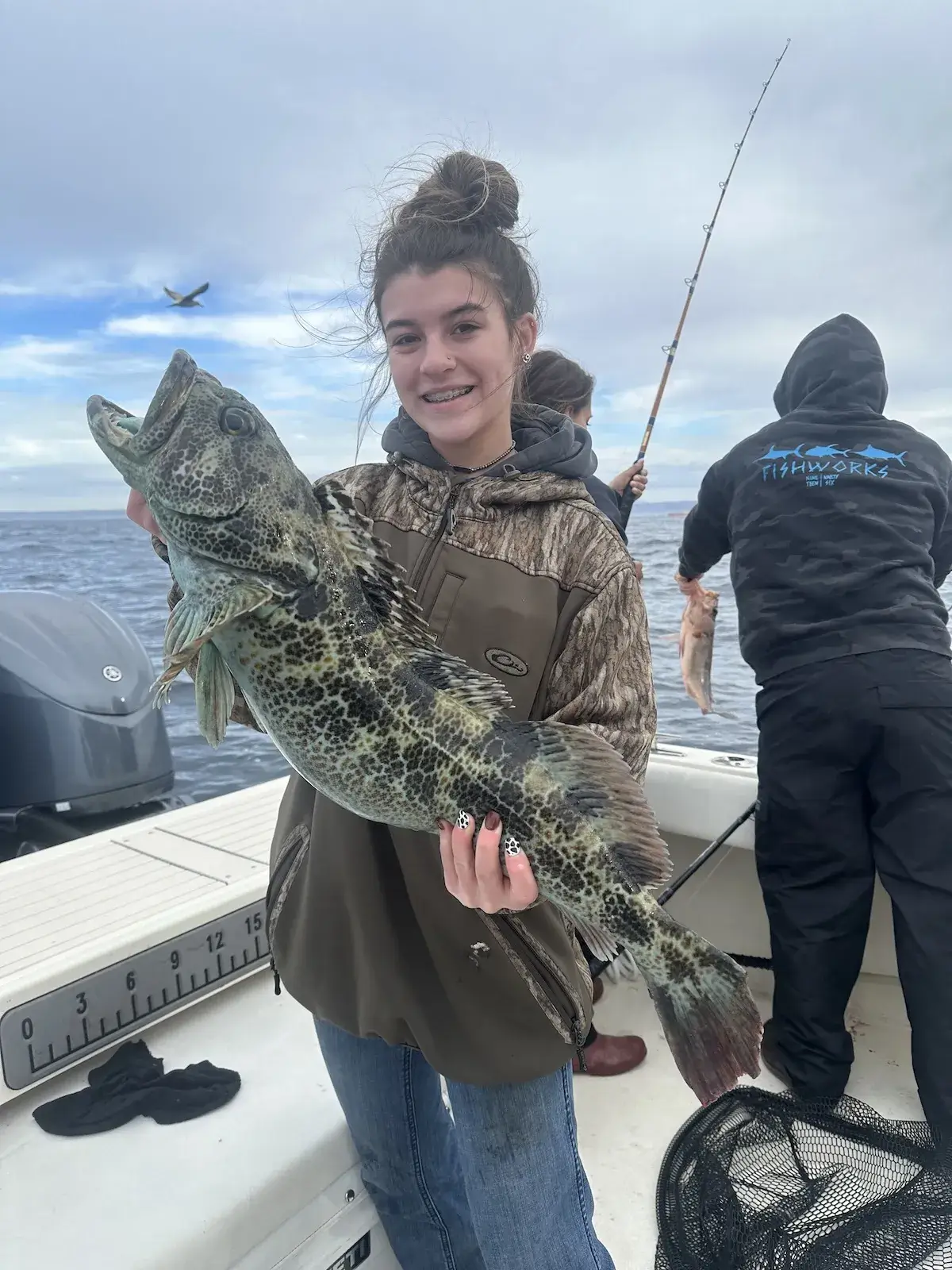
Lingcod and ocean whitefish live on the same rocky reefs as rockfish, fight harder, and fillet out into some of the cleanest white meat on the coast.
Meet the Lingcod and Ocean Whitefish
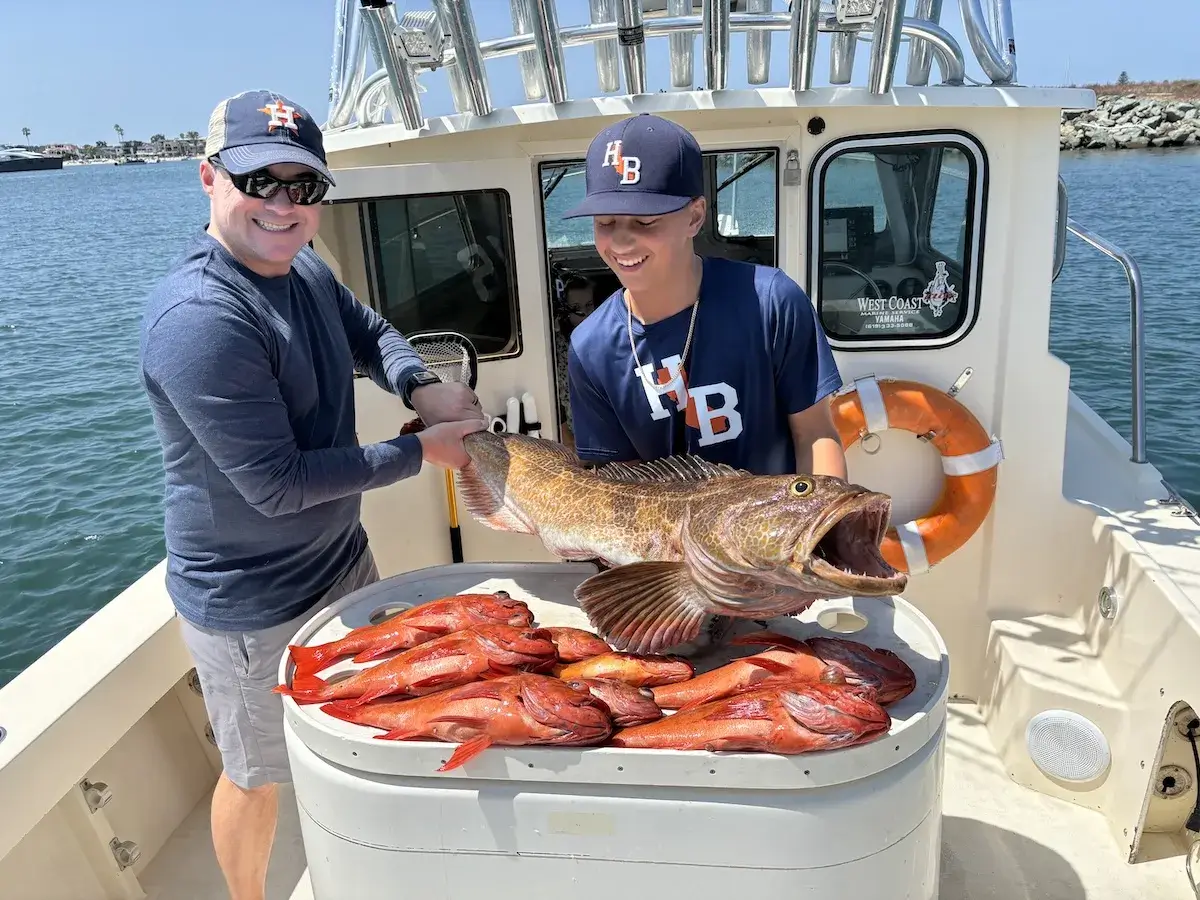
Two rock-loving species share this category, and both fight like reef heavyweights while fileting out into some of the cleanest white meat on the coast:
-
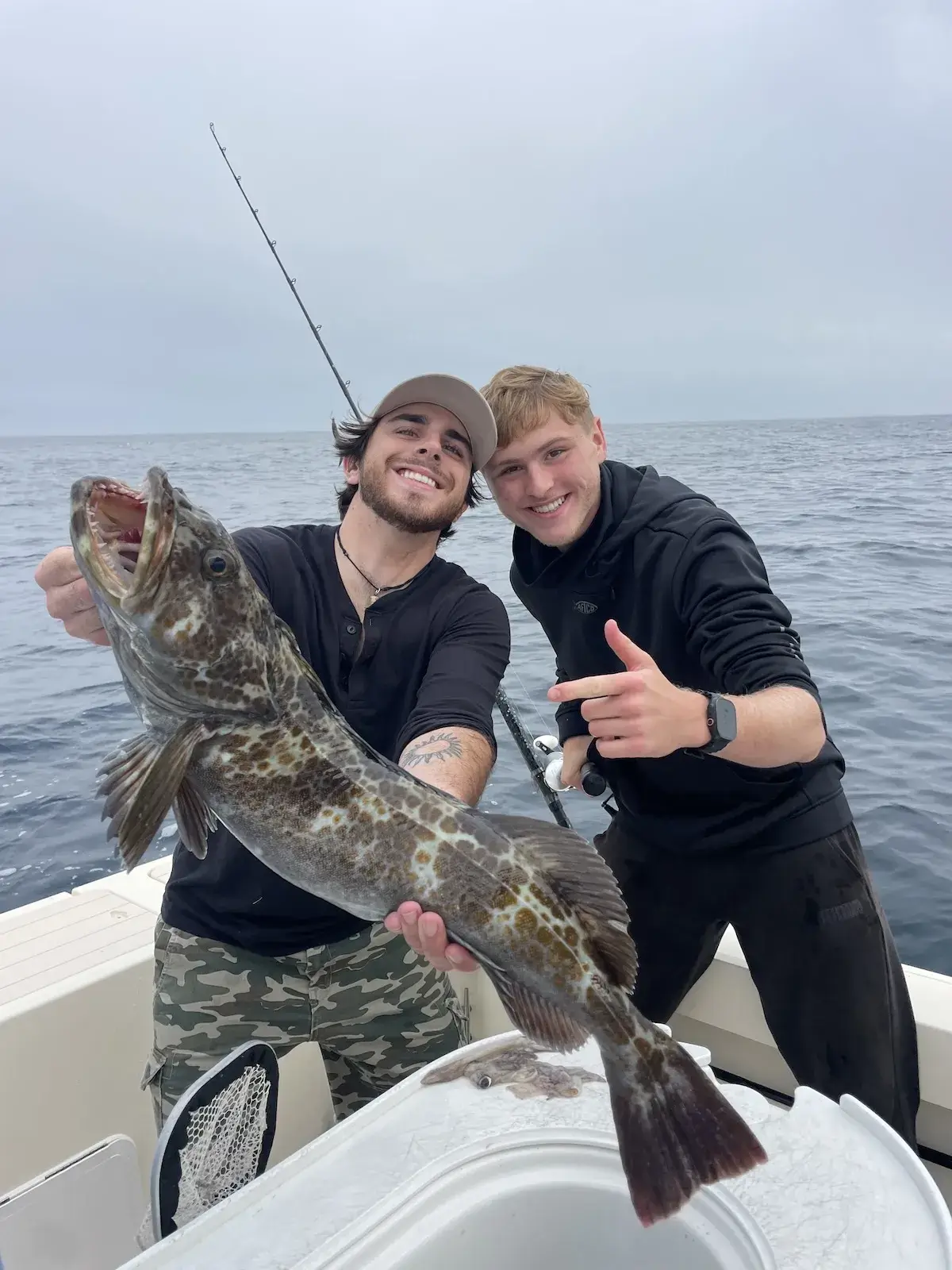
Lingcod (Ophiodon elongatus)5–25 lbs local Not a true cod — this species belongs to the greenling family. A long, muscular ambush predator with a huge mouth full of needle-sharp teeth. Typical local catches run 5 to 15 pounds, with trophy fish topping 25. One of the most aggressive biters on the reef.
-
Ocean Whitefish (Caulolatilus princeps)2–5 lbs typical A copper-pink fish with a long dorsal fin and the firm, flaky white meat that gave the species its name. Common catches run 2 to 5 pounds, and a hot drift can fill the cooler in a single stop.
Both species hold tight to the same rocky bottom that holds rockfish — you often catch all three on the same drop.
What Makes Them So Special
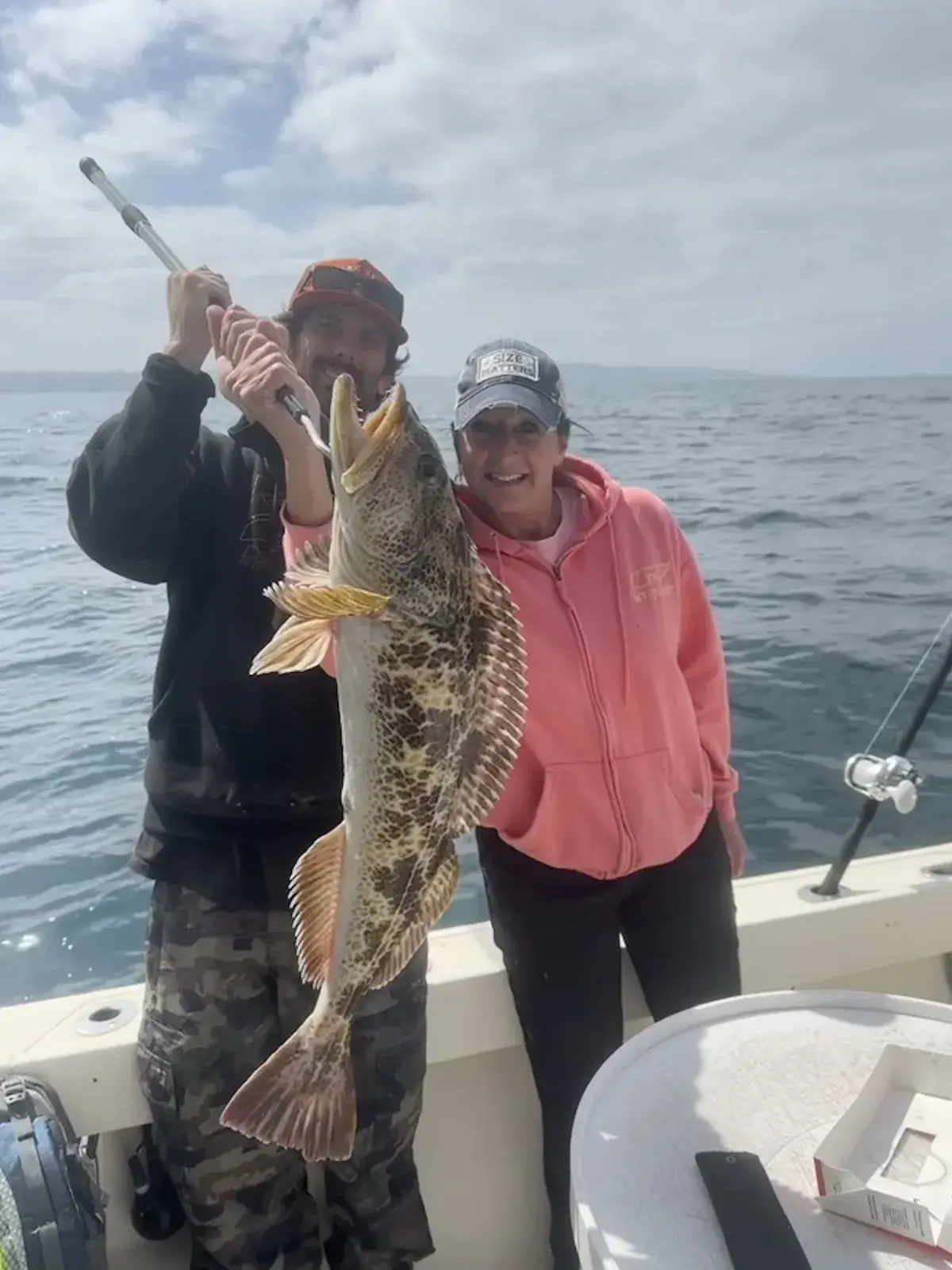
Lingcod carry one of the strangest biology stories on the entire West Coast — and the aggressive feeding behavior makes them one of the most exciting fish to fight to the surface.
A bile pigment called biliverdin turns the flesh turquoise to deep blue-green in roughly one in five fish. The color vanishes completely when cooked — the fillet turns standard white on the plate.
Trophy females in Alaskan and Northwest waters exceed 4 feet and can push past 50 pounds. Local San Diego fish are smaller, but the same muscle-to-size ratio means an impressive fight on any setup.
Lingcod can reach 20 years of age. Females grow much larger than males and live longer. Big fish on the reef are almost always female and have spent years learning exactly how to use the structure around them.
Lingcod will eat other lingcod without hesitation. That same aggression is why a big fish will grab a hooked rockfish on the way to the surface — and why gaffs sometimes land fish that were never technically hooked.
Where to Find Them Off Our Coast
These fish live on structure, current, and ambush angles. Brothers Sport Fishing captains work three types of bottom where lingcod and ocean whitefish concentrate.
Key Structure Types
- Rocky reefs and pinnacles — the same structure that holds rockfish
- Hard-bottom drop-offs where rock meets deeper soft bottom
- Wrecks and artificial structure that build local ecosystems
Depth Ranges
- 100 to 300 feet for most local lingcod and ocean whitefish
- Bigger fish tend to hold deeper on the edges of structure
- Ocean whitefish school more densely — hit one and there are more
Local Coastline Within 10 miles
- Resident lingcod and ocean whitefish on the local rocky bottom
- Year-round bite tied to the open California groundfish season
- Best covered on the 3/4 Day trip — enough running time to work the right spots
Coronados Islands 20 miles south — Mexico
- Bigger reefs, deeper structure, and lighter pressure than local grounds
- Larger average ocean whitefish — schools dense enough to fill a cooler
- Best shot at a true trophy lingcod on a full-day run
Tackle, Bait & Technique
Bottom fishing for lingcod uses the same drop-rig approach as rockfish, with a heavier rod and bigger bait to match the ambush bite. Brothers Sport Fishing crew sets you up correctly for both species.
| Rod | Medium-heavy to heavy conventional, 6 to 7 feet |
| Reel | Shimano conventional with 50 to 65 pound braid |
| Leader | 30 to 40 pound fluorocarbon |
| Hooks | 2/0 to 5/0 live-bait or octopus hooks |
| Bait | Live mackerel, sardine, or squid — big bait equals big fish |
| Lures | Heavy chrome iron, swimbaits, and curl-tail grubs; a 6 to 10 inch swimbait worked slow off the bottom is a proven lingcod killer |
The Lift-and-Drop
Bounce bait or jig off the bottom in 100 to 250 feet. Drop to the bottom, crank up one turn, then lift and drop the rod tip with a slow rhythm. When a lingcod commits, the rod loads heavy and stays loaded — there's no sharp tap, just increasing weight. Use a heavier rod than you would for rockfish so you can drag the fish out of structure before it dives back into rock.
Ocean Whitefish Drift
Same bottom-drift approach at the same depth, same structure. Ocean whitefish school more tightly than lingcod — hit one and there are usually more below. The bite is lighter than a lingcod grab, but the numbers can add up fast on an active school.
Your Lingcod Charter Options
These fish hold close enough to shore that you can target them on a 9-hour run. Two trip types leave from Mission Bay.
3/4 Day Charter
Nine hours on the local rocky bottom targeting lingcod and ocean whitefish alongside rockfish and sheephead. Enough running time to work the right structure and stay on fish when the drift is productive.
View This Charter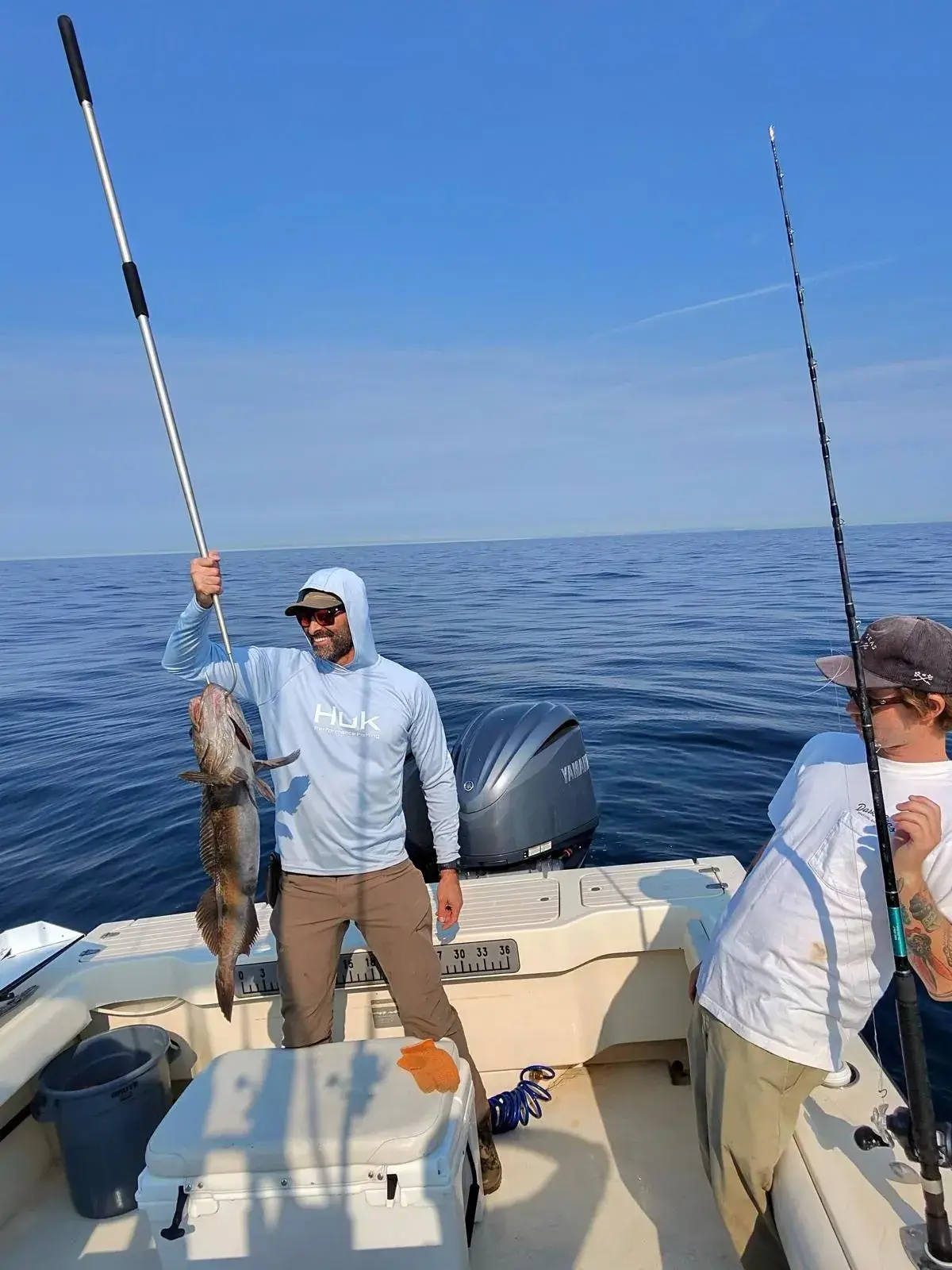
Coronado Islands Charter
A 12-hour day in Mexican waters for bigger reefs, deeper structure, and lighter pressure on the resident fish. The trip for anyone chasing a trophy lingcod or wanting to fill a cooler with ocean whitefish in a single stop. International ID required.
View This CharterAlso in the mix
A typical lingcod drop also pulls up rockfish on the same drift, California sheephead in the kelp, and the occasional halibut on the sandy edges. Mixed bags are the rule on rocky bottom trips.
Frequently Asked Questions
About 20% of lingcod show turquoise to deep blue-green flesh caused by a bile pigment called biliverdin. Scientists still debate the trigger — diet, nutritional stress, and natural pigment chemistry have all been proposed, and none has been confirmed definitively. What is confirmed: the color cooks completely out, the fillet turns standard white on the plate, and the fish is perfectly safe to eat. A blue lingcod in the cooler is a conversation piece, not a concern.
Season typically runs April 1 through December 31, tied to the California groundfish season. Specific depth zones and bag limits shift year to year per CDFW rules. Brothers Sport Fishing captains check the live current numbers before each trip to ensure everyone is fishing legally and efficiently.
California currently allows 2 lingcod per angler per day with a 22-inch minimum total length, though regulations update annually. Brothers Sport Fishing captains verify current limits before every trip and measure every keeper at the rail.
Excellent. Firm, white, mild fillets that hold up well grilled, pan-seared, blackened, or in fish tacos. The blue-fleshed ones taste identical to standard white ones once cooked — the pigment has no effect on flavor. Ocean whitefish is equally good on the plate and arguably better suited to lighter preparations like ceviche.
Typical local catches run 5 to 15 pounds, with trophy fish pushing past 25 in our waters. In Alaskan and Pacific Northwest waters, females can exceed 50 pounds and 4 feet in length. San Diego sits at the warmer southern edge of the species range, so the fish run a bit smaller — but they fight just as hard.
Ready to Pull a Lingcod Off the Reef?
Private charters from Mission Bay — 9-hour coastline trips and full-day Coronados runs available year-round (season permitting).
Text or Call +1 619-289-3352