Halibut Fishing
San Diego
California halibut and Pacific sanddab — two flatfish that live right off our coast, hit hard, and taste better than almost anything else on the rail.
Meet the Halibut
Two flatfish species hold the sandy edges off our coast, and either one fills a cooler and a dinner table nicely:
-
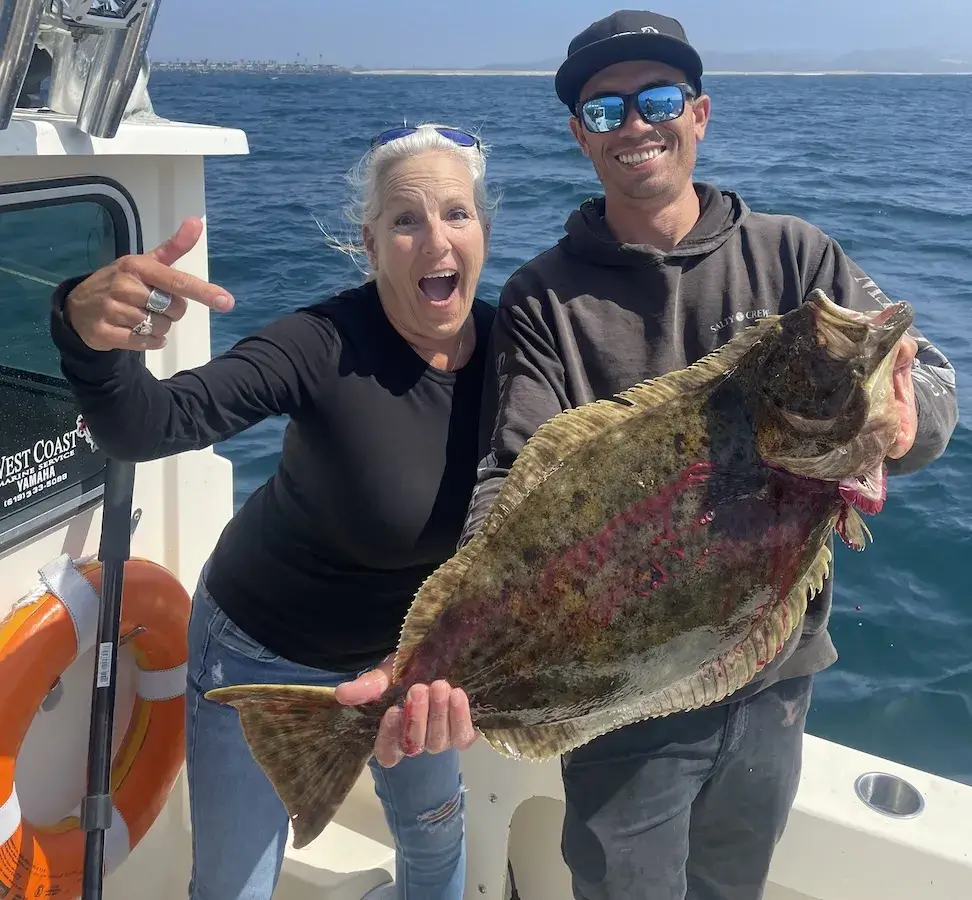
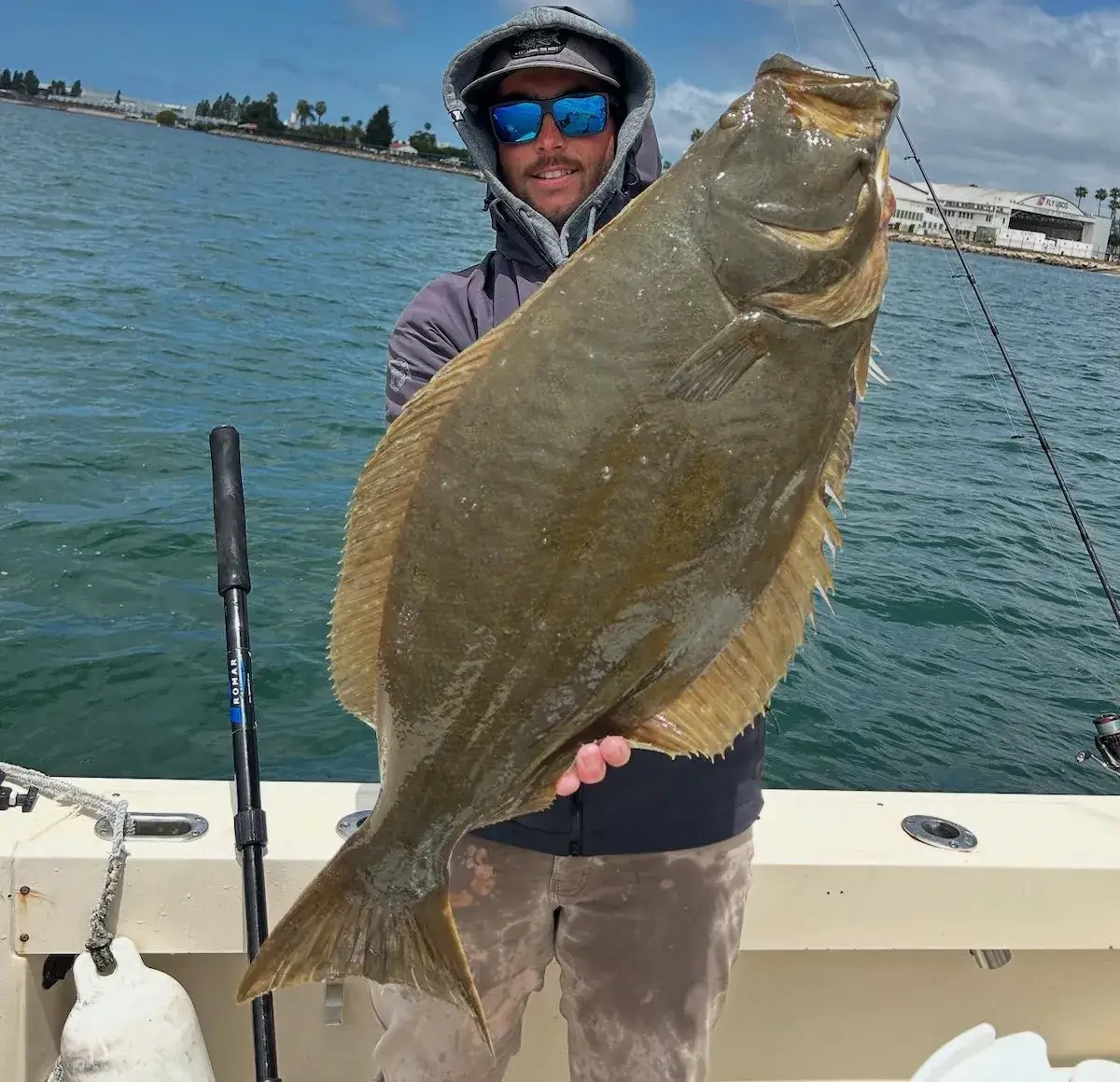
California Halibut8–30 lbs typical The trophy of the sandy bottom. Typical keepers run 8 to 20 pounds, with regular catches reaching 25 to 30. The state hook-and-line record stands at 67.3 pounds, set off Santa Rosa Island in 2011. Big fish are almost always female.
-
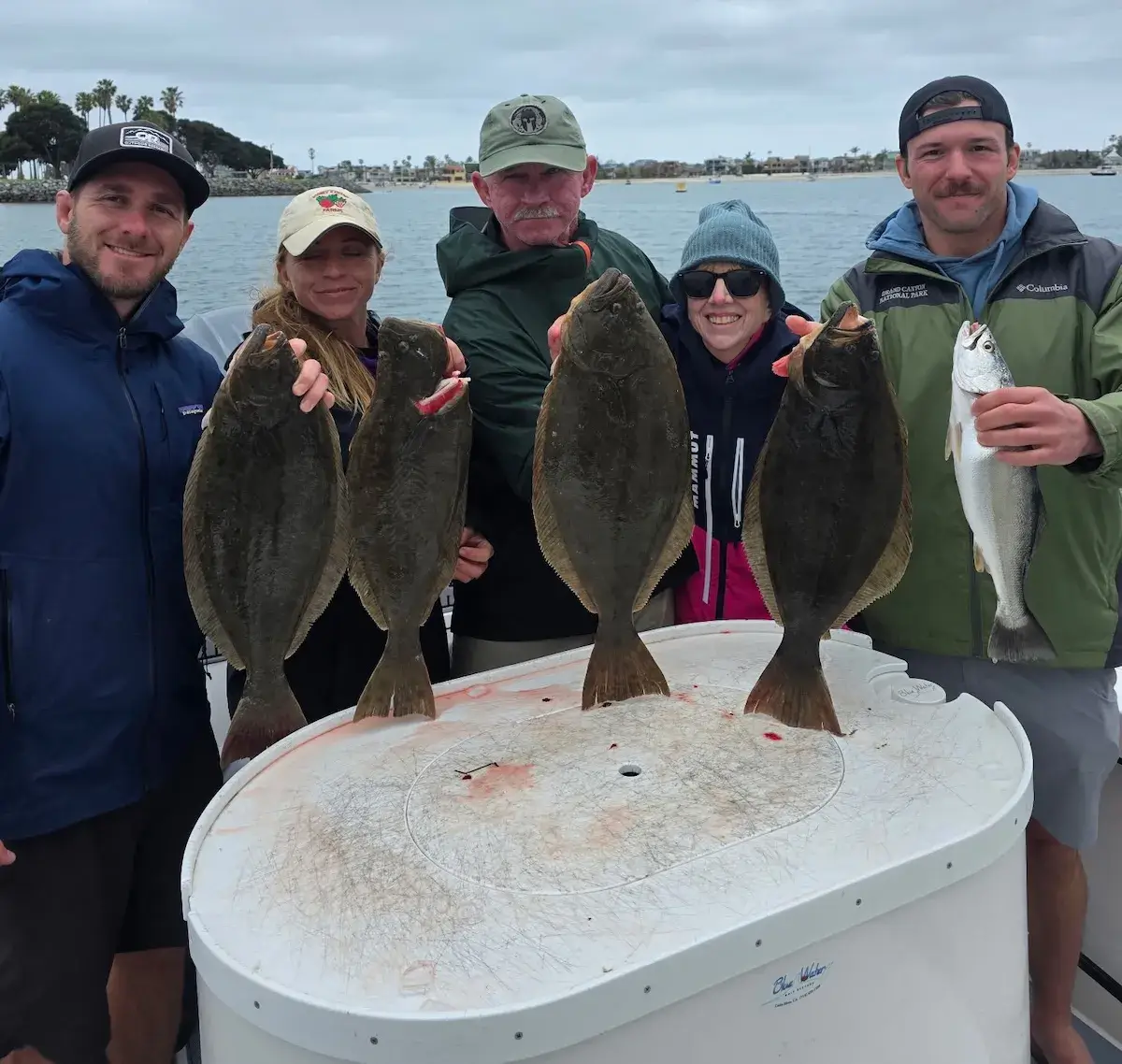
Pacific Sanddab4–12 inches The small but mighty cousin. Sanddabs travel in numbers — fill a cooler in a single drift. The white, flaky fillet is a local dinner staple and arguably the best-eating fish on the entire coast.
Both species are flatfish — they spend their lives lying flat on the bottom with both eyes on the same side of the head, ambushing prey from below. Strange body plan, exceptional table fare.
What Makes Them So Special
Flatfish carry one of the strangest body plans in the entire fish world — and the biology drives everything about how you catch them.
Set off Santa Rosa Island in 2011. A 72-pound diving record was set at Santa Cruz Island in 1982. Anything over 30 pounds is a memorable fish locally.
Halibut start life as normal symmetrical larvae. Within weeks, one eye migrates across the skull to join the other — the entire body flattens as it grows.
California halibut is a left-eyed flounder — both eyes typically end up on the left side. Pacific halibut (a different, colder-water species) is right-eyed.
The top side shifts color in seconds to match sand, rock, or kelp shadow. The bottom side stays white. Camouflage this precise is exactly why the ambush works every time.
Where to Find Them Off Our Coast
These flatfish love sandy bottom near structure, where bait moves predictably and ambush angles work in their favor.
Key Habitat Types
- Sand-rock transitions — edges where rocky reef meets clean sand
- Eelgrass beds and shallow flats inside Mission Bay
- 30 to 200 feet of water — bigger fish hold deeper
Sanddab Grounds
- 200 to 500 feet over soft bottom for fast multi-fish action
- Dropper-loop rigs with squid strips fill a cooler in one drift
- Different depth range from halibut — target both on the same day
Local Coastline Within 10 miles
- Year-round bite over sandy and mixed bottom off Mission Bay
- Peak action May through September as bait pushes into the shallows
- Best choice for the Half-Day and 3/4 Day trips
Coronados Islands 20 miles south — Mexico
- Sand-rock edges and lighter pressure produce bigger average size
- Full-day run across the international line — ID required
- Best shot at a 25–30+ pound fish on a single trip
Tackle, Bait & Technique
Halibut fishing is a slow drift game built around live bait near the bottom. Sanddab fishing is the fast-action opposite. Brothers Sport Fishing crews set you up for both.
| Rod | Medium spinning or conventional, 7 feet, with a soft tip |
| Reel | 20 to 40 pound braid |
| Leader | 20 to 30 pound fluorocarbon |
| Hooks | 1/0 to 2/0 live bait hooks, often paired with a Carolina rig and 3/4 to 2 oz sliding sinker |
| Bait | Live anchovies, smelt, sardines, or queenfish — live bait beats artificial almost every time |
| Lures | Bucktail jigs, swimbaits, and rubber-tail jigheads when bait is scarce |
The Slow Drift
Drift across sandy bottom with the bait swimming just above the sand. When a halibut eats, the bite often feels like a heavy weight rather than a sharp strike. Wait until the rod loads, reel into the fish, and set steadily — pumping too early pulls the hook out of a soft mouth.
Sanddab Fast Action
Small dropper-loop rigs with squid strips dropped to the bottom in 200 to 500 feet of soft sand. Multiple fish per drop, a quick cooler fill, and arguably the best white flaky fillet on the coast. A completely different pace from halibut — and a great way to end the day.
Your Halibut Charter Options
These fish live close enough to shore that you can chase them on a short trip or a longer one. Three trip types fit best.
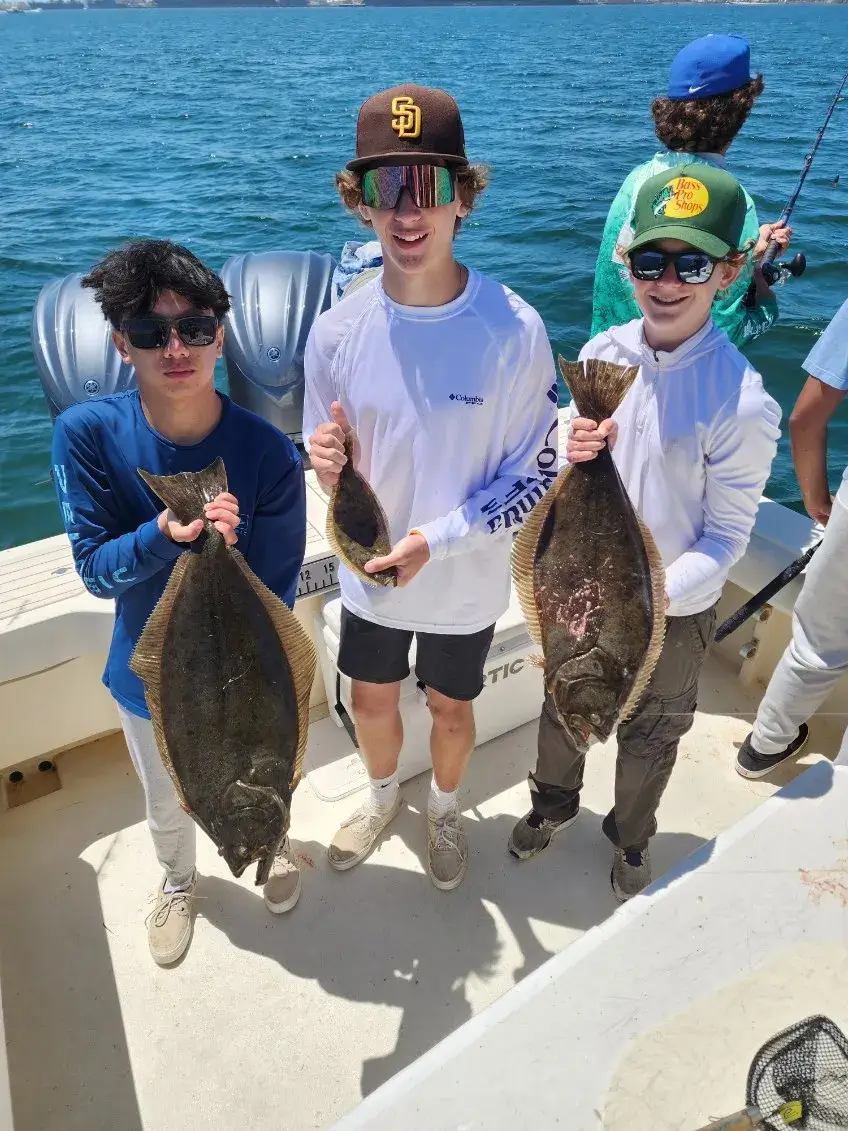
Half-Day Charter
Nearshore fishing built around halibut and calico bass on the local sandy and kelp bottom. The most popular trip for this fishery — enough time to work the best drifts and fill a cooler.
View This Charter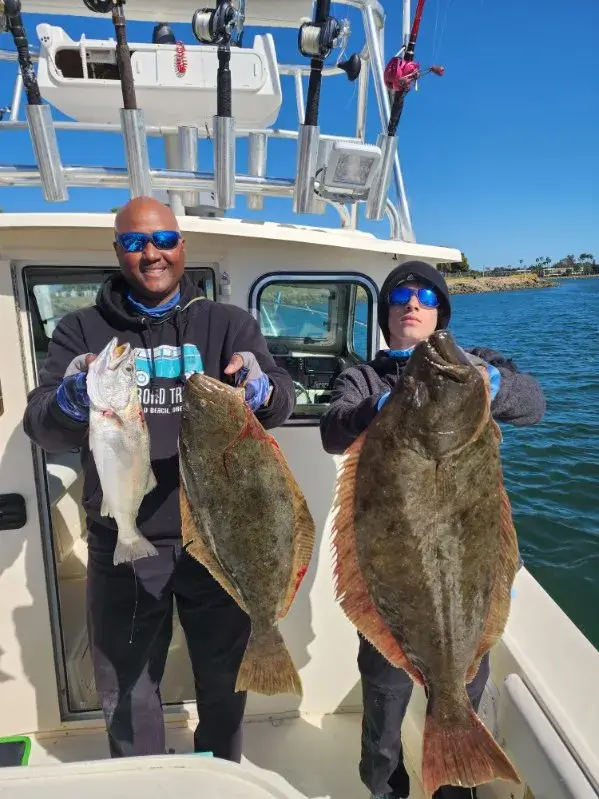
3/4 Day Charter
A longer coastline run that covers all the local grounds — more drifts, more variety, and a better shot at mixing halibut with sanddab and other inshore species in one trip.
View This Charter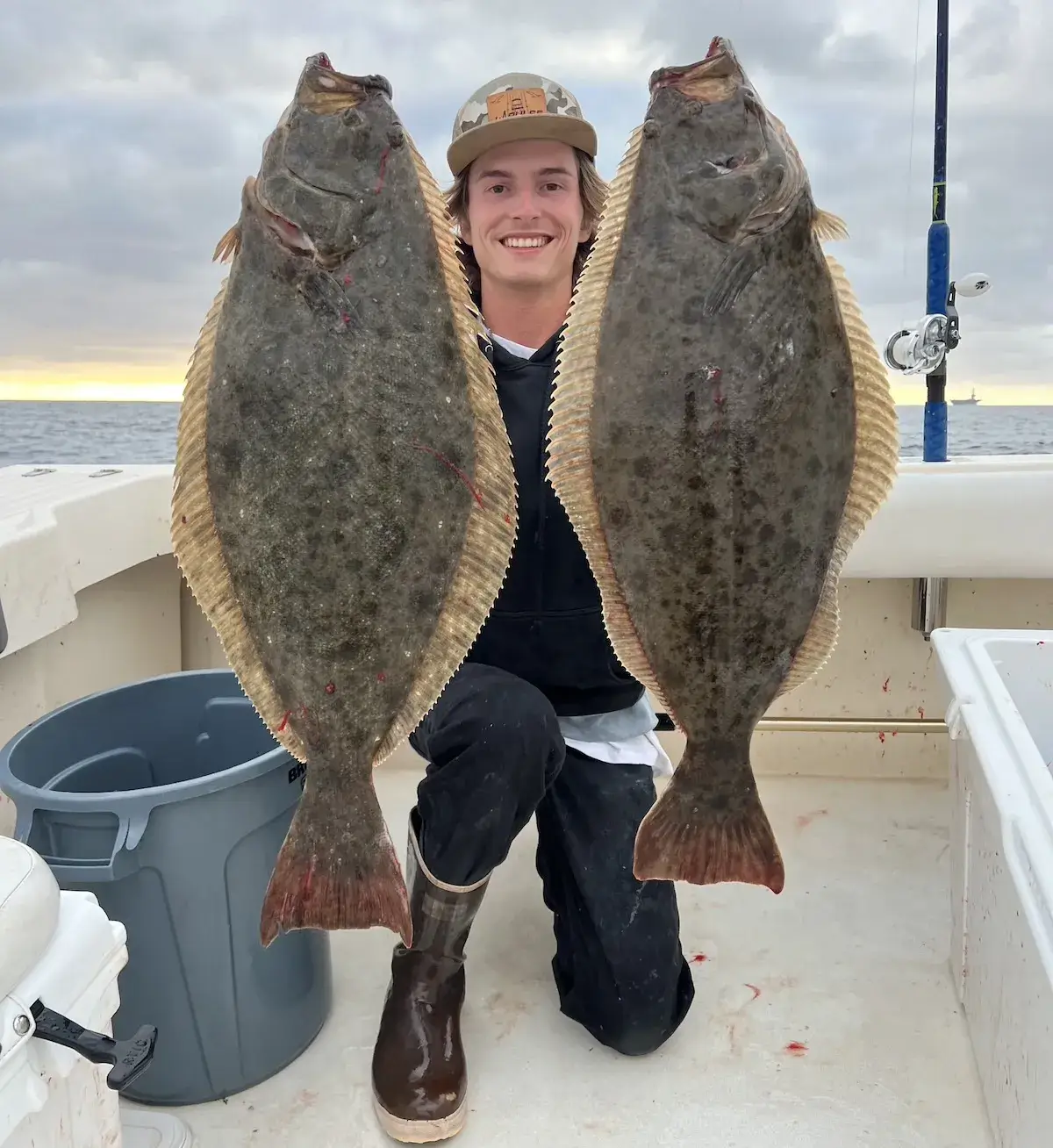
Coronado Islands Charter
A 12-hour day in Mexican waters for a shot at bigger average size and the sand-rock edges off Baja. International ID required. The trip for anyone targeting a 25–30+ pound fish.
View This CharterAlso in the mix
A halibut drift regularly pulls up calico bass along the kelp lines and rockfish on the rocky edges on the same trip. Mixed bags are normal here.
Frequently Asked Questions
Peak action runs May through September, when warmer water pushes bait into the shallows and big females come up to feed. The bite stays steady year-round at lower volume, especially at the Coronados where the sand-rock edges hold fish through the cooler months.
California requires a minimum total length of 22 inches for California halibut. The captain measures every keeper at the rail before it goes in the cooler. Regulations can update mid-season — Brothers Sport Fishing captains run to current CDFW rules on every trip.
Different species entirely. California halibut (Paralichthys californicus) is the smaller, warmer-water flatfish that lives off our coast. Pacific halibut (Hippoglossus stenolepis) is the giant cold-water species from Alaska and the Pacific Northwest — Pacific halibut regularly tops 200 pounds. Pacific halibut is right-eyed; California halibut is left-eyed. Both taste excellent, but only California halibut is available on our charters.
Typical keepers run 8 to 20 pounds off the local coastline. The state hook-and-line record is 67.3 pounds, set off Santa Rosa Island in 2011. Anything over 30 pounds is a memorable fish locally — most of those come out of the Coronados or on full-day trips in the peak summer months.
Yes. The Half-Day Charter explicitly targets halibut and calico bass on the local sandy and kelp bottom — it is the most popular short trip for this fishery. You get 5.5 hours on the water, which is enough for multiple productive drifts over the best local grounds.
Ready to Pull a Flatfish Off the Bottom?
Private halibut charters from Mission Bay — year-round, peak season May through September.
Text or Call +1 619-289-3352