Shark Fishing
San Diego
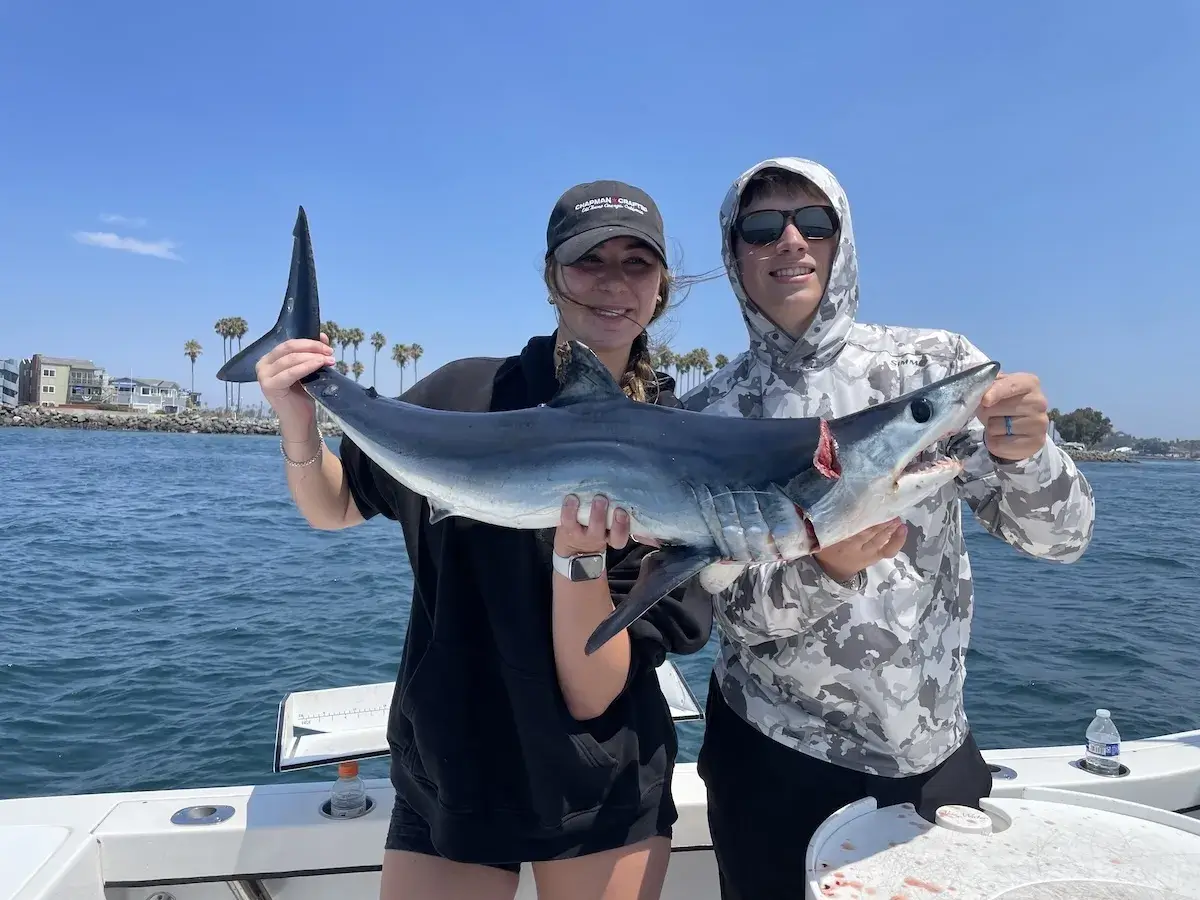
Mako, thresher, blue shark, and a handful of inshore species — Southern California is one of the great shark fisheries on the planet, right off our coast.
Meet the Sharks
Southern California is one of the great shark fisheries on the planet, with a mix of pelagic speedsters, reef-edge ambushers, and the occasional protected species you tag and release for the photo. The local lineup:
-
Shortfin Mako50–150 lbs avg The most famous game shark on the coast. Makos leap clean out of the water on the strike and rank among the most active fighters in saltwater. Pound for pound, the hottest pelagic battle available.
-
Thresher50–150 lbs avg Long upper tail lobe that the fish actually uses as a weapon, slapping schools of baitfish to stun them before circling back. A genuinely prehistoric hunting tactic.
-
Blue SharkCatch & Release Slender, deep blue back, and long pectoral fins built for offshore cruising. Common around the offshore grounds and almost always released.
-
Soupfin (Tope), Sevengill & Leopard Smaller coastline species. Soupfin gets its name from old Chinese fin-soup demand. Sevengill is a primitive species with seven gill slits instead of the typical five. Leopard is the spotted shallow-water fish that surfers spot in summer.
-
Hammerhead & Great WhiteProtected — Release Both protected in California. Hookups happen, but every fish goes back in the water for a clean release.
If you like big animals that hit hard and look prehistoric, this is your trip.
Protected Species ProtocolCalifornia protects hammerheads and great whites. If one of those comes up on the line, the captain coordinates a quick, safe release at the rail — no photo in the water, fish goes back healthy.
What Makes Them So Special
These fish are biological time capsules. The group has been swimming the planet's oceans for more than 400 million years, predating trees, dinosaurs, and most life as we know it.
Sharks predate trees, dinosaurs, and most complex life. They have outlasted every mass extinction event in Earth's history.
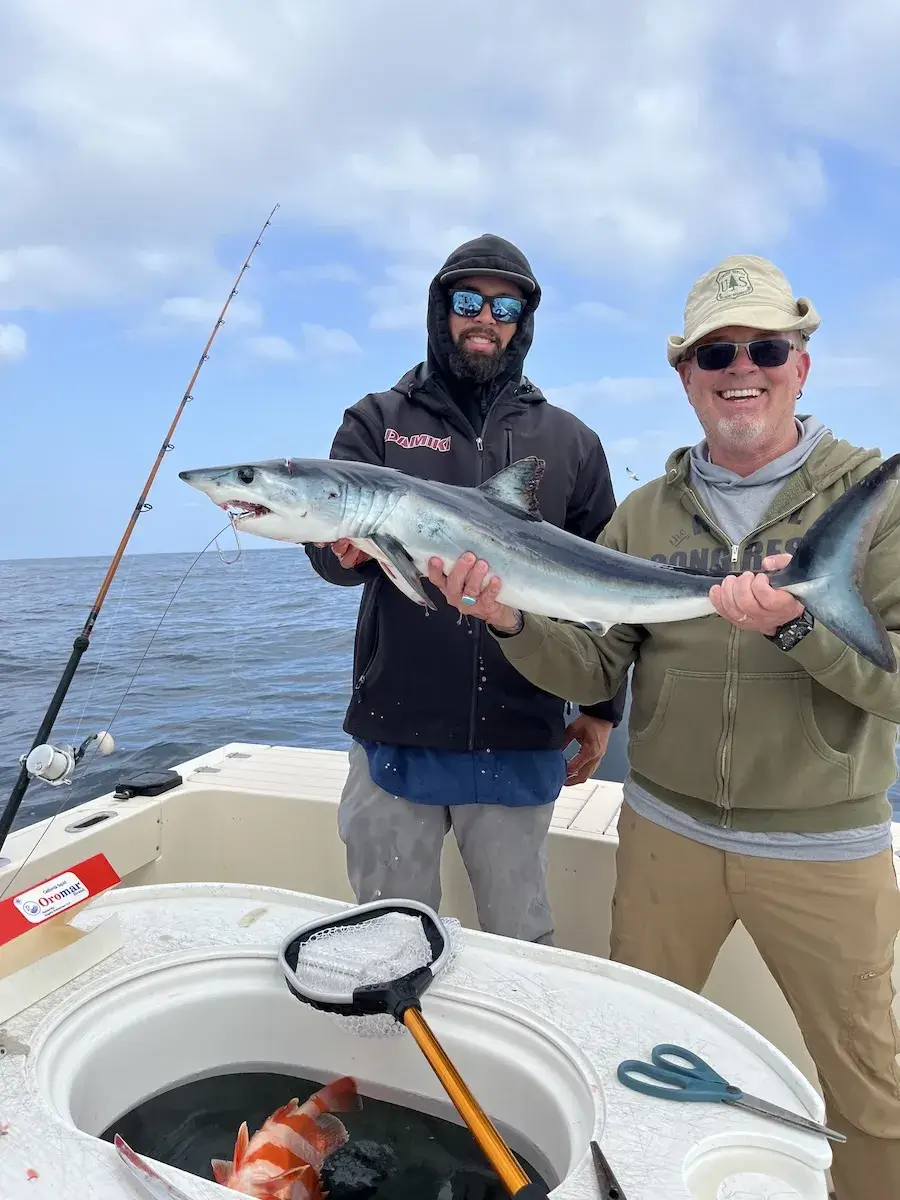
Bio-loggers on wild mako measured burst speeds near 11 mph, with cruising around 4 mph. The fastest confirmed speed of any shark species by field measurement.
The thresher's upper tail lobe can equal half the fish's total body length. High-speed video confirms it whips this overhead to stun prey before feeding.
Most modern sharks have five gill slits. The sevengill keeps the older, ancestral blueprint — a holdover from an ancient lineage unchanged for tens of millions of years.
Where to Find Them Off Our Coast
These predators move with the bait, the temperature, and the structure. Brothers Sport Fishing captains work three zones depending on the target species.
Local Coastline Within 10 miles
- Sevengill, leopard, and soupfin patrol shallower water and bay mouths
- Good nearshore variety for anglers who want coastline fishing
- Leopard sharks active spring through summer close to shore
Coronados Islands 20 miles south — Mexico
- Reefs and current lines hold makos, threshers, and the occasional surprise
- Mixed-bag day — reef sharks plus pelagic species on the same run
- International ID required for this crossing
Offshore Grounds 30–100 miles out
- Prime mako, blue shark, and thresher territory in warm-water breaks
- Chum slick technique works best in deep blue water far from the coast
- Bluefin and yellowfin tuna often share the same offshore zones
Tackle, Bait & Technique
This kind of fishing rewards patience, smell, and serious gear. Brothers Sport Fishing captains run full chum operations — you supply the focus, the boat supplies everything else.
| Rod | Heavy conventional, 6 to 7 feet |
| Reel | Two-speed conventional with at least 400 yards of 65–80 lb braid |
| Leader | 6 to 10 feet of 250 lb monofilament or wire — built to handle teeth and tail |
| Hooks | 8/0 to 12/0 non-stainless circle hooks for safer releases |
| Bait | Whole mackerel, bonito, or barracuda — fresh and bloody beats frozen every time |
| Chum | Constant slick of ground fish and oil run off the back of the boat |
Drift Fishing the Chum Slick
The captain finds the right water temperature and color break, kills the engines, and you wait. The slick can take 30 minutes to an hour to bring a fish up from depth. When a fin shows up, the rods come tight one after another.
When the Bite Comes
Makos often free-jump on the strike, clearing the water by 10 feet or more. Wire your leader, let the circle hooks set themselves, and fight the fish steadily until the leader hits the rod tip. The captain and mate handle the rail work — you handle the rod.
Safety at the Rail
The bite is the easy part. The danger is at the rail: teeth, tails, and gills in motion. Brothers Sport Fishing crews wire every leader, gaff carefully, and manage the fish at the boat until you have your photo and the catch is secured or safely back in the water.
Shark Action Off San Diego
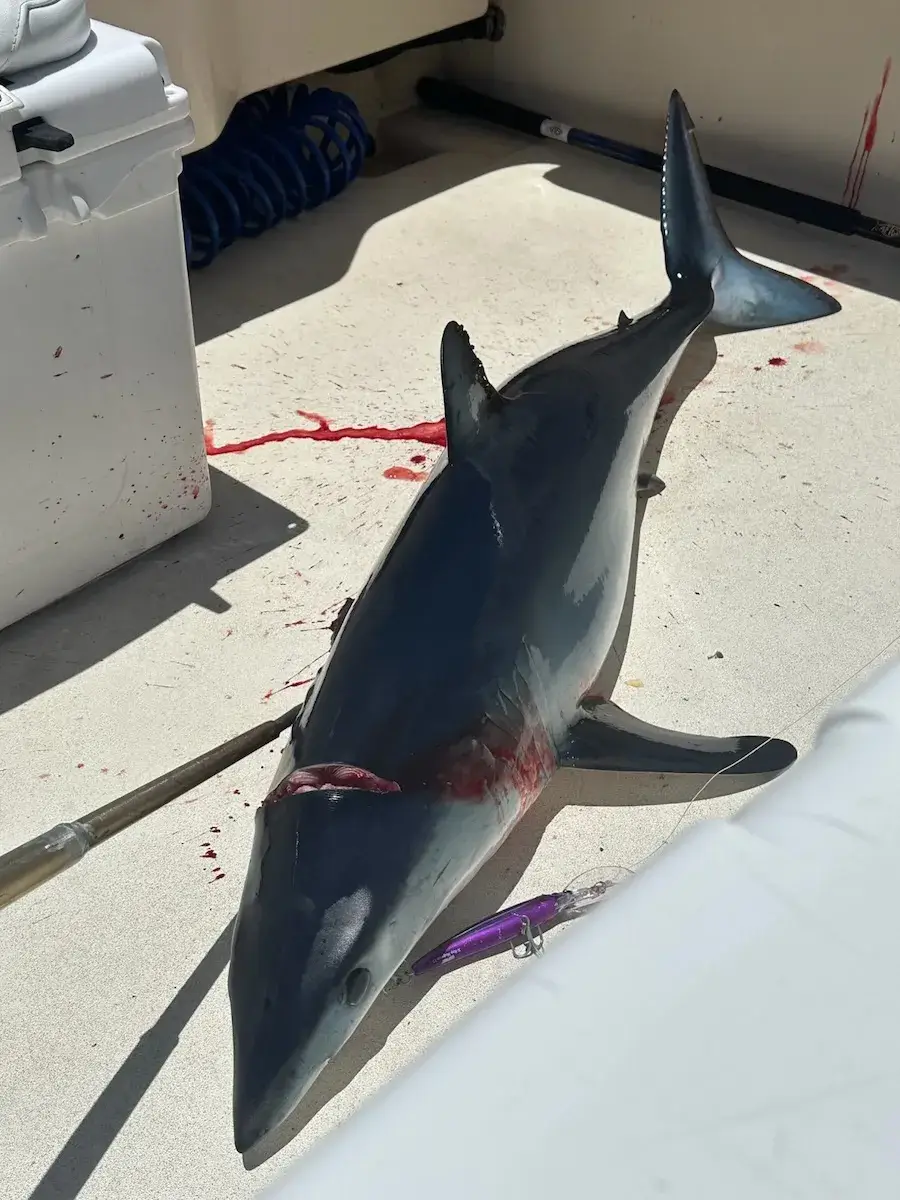
A look at what happens when the chum slick does its job and a big pelagic shark finds the boat.
Your Shark Charter Options
These trips need time on the water and the right boat positioning. Three trip types do the job — from the offshore zone to the Coronados reef edges.
3/4 Day Charter
Dedicated shark offshore option, built around mako and thresher in our offshore zone. Plenty of time to work the chum slick, set multiple rods, and wait out a quality fish.
View This CharterCoronado Islands Charter
A 12-hour day across the international line, working the reef edges and current lines south of the border for a mixed-bag day with mako, thresher, and coastal species.
View This CharterOffshore Charter
Best for chasing the bigger pelagics that hold in deep blue water alongside tuna and dorado. The chum slick runs all day — a full offshore experience with sharks as the primary target.
View This CharterAlso in the mix
Most trips here come with side action. Plan on running into bluefin and yellowfin tuna on the offshore grounds and trophy yellowtail at the Coronados.
Frequently Asked Questions
California allows angler harvest of mako, thresher, blue shark, and several smaller coastline species under current size and bag rules. Hammerhead and great white are protected and must be released immediately. The captain keeps current on regulations — rules in this fishery do update, and the boat always runs to the latest legal standard.
Mako and thresher peak May through October, with warm-water years extending the bite into November or December. Leopard and soupfin run nearshore year-round. During an El Niño, warm water pushes the offshore species surprisingly close — some of the biggest mako years on record have come out of strong warm-water cycles.
The bite is the easy part. The danger is at the rail: teeth, tails, and gills in motion on a moving boat. Brothers Sport Fishing crews wire every leader, gaff carefully, and manage the fish at the boat until you have your photo and the catch is secured or safely back in the water. Experienced deckhands make the difference between a clean operation and a close call.
Local boats land 200 to 300 pound makos and threshers regularly, with occasional 400+ pound trophies in big-bait years. The California sport fishing records for both species are held by fish caught within range of San Diego. Larger protected sharks — hammerheads, great whites — get released without weight or measurement.
Yes. A chum slick is the heart of the technique. Captains run a constant slick of ground fish and oil off the back of the boat to draw the bite from miles away. The slick can take 30 minutes to an hour to bring a fish in. Once one comes in, others often follow — shark trips can go from zero activity to multiple rods bent at once very quickly.
Ready for the Big One?
Private shark charters from Mission Bay — May through October and warm-water years beyond.
Text or Call +1 619-289-3352